

Older TVs, game consoles, turntables, and capture setups often need a steady bridge between signal types, and that’s where the right converter earns its place. You want clean connections, the right input and output match, and a layout that fits the gear already sitting in your home entertainment stack. This roundup focuses on options that make those handoffs easier without turning setup into a weekend project.
Quick Look At The Shortlist
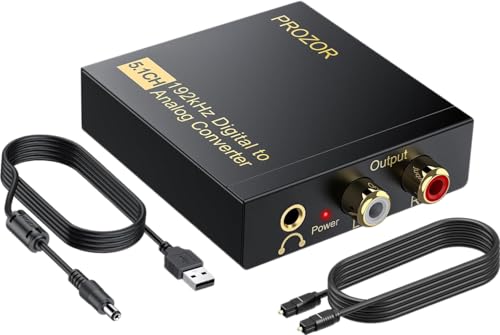
PROZOR 192Khz Digital to Analog Audio Converter 5.1CH Optical to RCA

CAMWAY Digital to Analog Audio Converter Optical to RCA 5.7 ft Cable
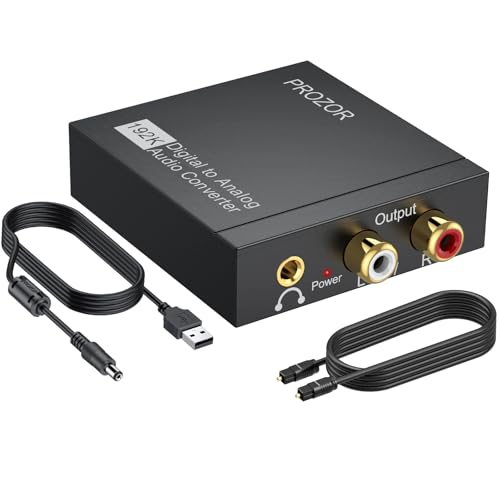
PROZOR 192KHz Digital to Analog Audio Converter RCA 3.5mm

PROZOR Analog to Digital Audio Converter RCA to Optical Cable

Magnavox DTV Digital to Analog Converter tb100mw9

Analog to Digital Audio Converter RCA to Optical Coaxial Adapter
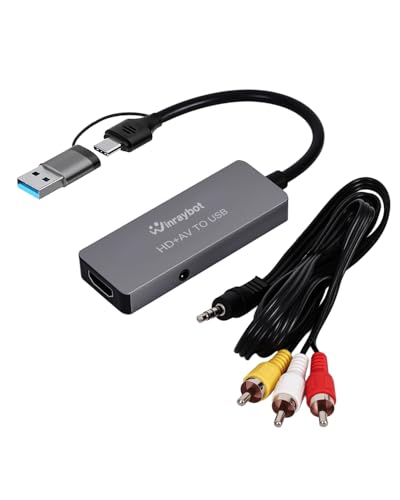
VHS to Digital Converter RCA to USB Adapter USB-A+USB-C
More Details On Our Top Picks
This PROZOR unit fits the common living-room problem where an optical source needs RCA or 3.5mm analog output. The 5.1CH support matters because many home setups still mix older amplifiers, HDTVs, Blu-ray gear, and game consoles. The magnetic ring power cord also hints at a little extra attention to signal stability, which is the sort of detail that matters more than flashy styling.
Compared with the CAMWAY pick, this one leans more toward broad compatibility than added cable length. You may find it especially handy in a cabinet where the converter sits close to the TV and the rest of the run is already sorted. The trade-off is simple, it’s a straightforward bridge rather than a feature-heavy box.
Strong Points
- Handles optical-to-analog conversion for everyday TV and console use.
- Works with both RCA and 3.5mm output paths, which gives you more hookup options.
- 5.1CH support helps it fit multi-channel source chains better than a barebones stereo-only unit.
- Magnetic ring power cord points to a cleaner, more stable connection profile.
Things To Consider
- It stays in the simple adapter lane, so you should not expect extras beyond conversion.
- The compact form is easy to place, though it still needs a tidy spot near your source gear.
Feature Snapshot
Who It Suits Best
Home theater users with one optical source and older analog audio equipment get the most from this model.
A Better Fit Elsewhere
CAMWAY B0CRB8W7VD suits desktop or shelf setups better because its built-in 5.7 ft cable gives you more placement room.
CAMWAY stands out for the attached 5.7 ft audio cable, which can make a cramped entertainment shelf feel less cramped. That extra reach matters in real rooms, especially when the converter needs to sit away from the TV or receiver. The unit keeps the conversion path direct, so you’re looking at practical placement help more than a long list of extras.
Relative to the PROZOR 5.1CH model, this one is less about surround-oriented wording and more about easier physical routing. The honest read is that cable length can save frustration in a small media console. For a straightforward optical-to-RCA job, that alone can make it easier to live with day after day.
Highlights
- The built-in 5.7 ft cable gives you flexibility in tighter entertainment setups.
- Optical to RCA conversion keeps older speakers and amps in the loop.
- SPDIF support broadens compatibility with common digital audio outputs.
- The direct cable layout reduces the number of loose parts on the shelf.
Small Caveats
- The attached cable helps placement, though it also means less separation from the main unit.
- It’s best suited to simple audio routing, not a more complex home theater web.
- Cable management matters here, so a tidy setup will feel more polished.
Core Details
Made For
Small media centers and desktop audio setups benefit most from the attached cable and simple layout.
Another Choice May Suit
PROZOR B0FFMS7J2H fits better for mixed analog output needs, especially where RCA and 3.5mm both matter.
This PROZOR model earns its spot by giving you more output paths in one compact converter. RCA stands for the familiar red-and-white analog plugs, while 3.5mm means the small headphone-style jack many speakers and amps still use. That mix makes it a useful bridge for home cinema gear, Apple TV setups, and older DVD or PS3 systems.
Compared with the first PROZOR unit, this one is the better fit when your downstream gear is a little more mixed. You may find the extra output flexibility more useful than surround language alone. The trade-off is that flexibility can tempt messy wiring, so a short cable plan helps.
What We Like
- RCA and 3.5mm outputs give you two common analog connection paths.
- Optical SPDIF and Toslink support keep it useful with many digital sources.
- 192kHz handling is a helpful spec for matching higher-resolution source chains.
- It suits mixed entertainment systems without needing multiple adapters.
- The compact format keeps shelf clutter under control.
Areas To Watch
- More output options can lead to extra cable clutter around the rack.
- It still serves a focused conversion job, so it won’t replace a full audio switcher.
Details At A Glance
Best Suited To
Home cinema users and mixed-gear setups benefit most from the wider output selection.
Where A Sibling Pick Shines
CAMWAY B0CRB8W7VD suits a neater shelf layout better because the attached cable helps spacing without extra planning.
This PROZOR model goes the other direction, turning analog RCA source signals into optical output. That matters for record players, CD players, and older DVD decks feeding a soundbar or modern receiver. The built-in RCA-to-optical cable keeps the setup simple, though the not-reversible design means you need to know your signal direction before you plug anything in.
Compared with the first three picks, this one solves a different problem entirely, so it belongs in carts for source conversion rather than sink conversion. You may appreciate the cleaner chain in a living room where the source sits close to the soundbar. It’s a straightforward choice, just not a flexible one.
Reasons To Buy
- Converts RCA analog output into optical digital output.
- Built-in cable reduces the need to sort out an extra lead.
- Works well for turntable, CD, and DVD source connections.
- Helps newer soundbars accept older audio equipment more cleanly.
Worth Noting
- The direction is fixed, so it only fits one side of the conversion job.
- Built-in cabling is convenient, but damaged cable sections are harder to separate from the unit.
- Placement still matters, especially in tighter audio cabinets.
Quick Facts
The Right Fit
Households connecting legacy stereo sources to a modern soundbar get the clearest benefit here.
Skip It When
Analog-to-digital converter users who need reverse routing should look at PROZOR B088T8KW1C instead.
This Magnavox unit belongs in the group that handles broadcast signal conversion rather than pure audio routing. For households keeping older televisions in service, that distinction matters a lot more than fancy styling. It’s the kind of box you set once and leave in place, which suits a spare room TV or a backup setup.
Compared with the audio-focused PROZOR and CAMWAY models, this one addresses a different side of the analog-to-digital story. The honest read is that legacy TV use can be fussy, so a known-format converter helps reduce guesswork. You’ll want it for television compatibility, not for speaker routing or studio-style capture.
Best Bits
- Built for DTV-to-analog TV conversion rather than audio-only adaptation.
- Useful for keeping an older set connected to modern broadcast changes.
- Simple category focus makes the setup logic easier to follow.
- Good fit for secondary rooms where the TV just needs to keep working.
Points To Note
- Its purpose is narrower than the audio converters in this roundup.
- You’re choosing a television bridge, so it won’t help with receiver or soundbar hookups.
Technical Sheet
Whose Shelf It Belongs On
Anyone keeping an older TV running with modern broadcast signals will get the most from this box.
Look Elsewhere When
WinRaybot B0FGJ351TL suits video capture and digitizing work better because it’s built around USB output and media transfer.
This XPTSFDU adapter gives you more routing freedom than the simpler one-way converters above. RCA and 3.5mm analog inputs can move into either Toslink or coaxial digital output, which is useful in a mixed entertainment stack. Toslink means optical cable, while coaxial refers to the single digital line many receivers still accept.
Compared with the PROZOR RCA-to-optical unit, this one gives you two digital output paths instead of one. That extra choice can help in a room where the receiver and soundbar do not share the same input preference. It does take a little more thought at setup, but the flexibility is real.
Upsides
- Offers both optical and coaxial digital outputs.
- Accepts RCA and 3.5mm analog sources.
- Useful for households with more than one digital destination.
- Can simplify a stack that mixes older and newer audio gear.
Room For Improvement
- The extra routing options ask for more careful cable planning.
- It’s more specialized than a basic one-way converter, so placement matters.
Core Details
Perfect Match For
Homes with multiple digital inputs on different devices get the most benefit from this broader output set.
Reach For A Different Pick When
PROZOR B0DJSJ482Z suits a simpler turntable-to-soundbar path better because the direction is fixed and easier to map.
WinRaybot’s converter is aimed at digitizing old tape sources rather than handling a simple audio path. RCA, S-Video, and HDMI input support, along with USB-A and USB-C output, make it more adaptable for laptop capture and video streaming workflows. That makes it a different kind of tool from the audio converters above, closer to an archive bridge than a living-room adapter.
Compared with the Magnavox TV converter, this one is built for video capture work, not broadcast reception. You may find the dual USB connector format handy on newer laptops that no longer share the same ports. The trade-off is complexity, but that’s normal for capture gear.
What We Like
- Designed for VHS and analog video transfer into digital workflows.
- RCA, S-Video, and HDMI input support widen source compatibility.
- USB-A and USB-C output covers older and newer laptop ports.
- Useful for home archiving and media editing projects.
Honest Caveats
- Capture gear tends to ask for more setup patience than a basic audio adapter.
- The broader feature set brings more connection decisions to sort out.
Feature Rundown
Who Should Grab It
Anyone digitizing old tapes or building a home media archive gets the clearest benefit here.
Swap It Out When
Magnavox B0013ZKZGU suits a television-only signal conversion job better because it stays focused on DTV use.
How To Choose The Right Digitals To Analogue Converter
Match The Signal Direction First
Start with the direction of travel, because digital-to-analog and analog-to-digital converters solve opposite problems. Optical or SPDIF sources usually feed analog speakers, amps, or older TVs on one side of the category, while RCA or 3.5mm sources may need to move into optical or coaxial inputs on the other. The wrong direction means the box can look right on paper and still miss the job completely.
That’s why the PROZOR B0DJSJ482Z and the XPTSFDU B0G6KMPZVQ serve very different rooms. One helps older sources reach modern audio gear, while the other helps modern digital inputs accept legacy analog gear. A quick check of source and destination ports saves a lot of plug-and-unplug frustration.
Choose Outputs That Fit Your Gear
RCA is the red-and-white analog pair found on older audio equipment, while 3.5mm is the small jack common on compact speakers and some receivers. Toslink is an optical cable format, and coaxial is a single digital line that still shows up on plenty of home theater equipment. A converter with both output options gives you more freedom, but it also asks for more thoughtful cable routing.
For a small shelf or TV console, a built-in cable such as the CAMWAY B0CRB8W7VD can make placement easier. Mixed systems benefit from flexible output paths, like the PROZOR B0FFMS7J2H or the XPTSFDU B0G6KMPZVQ. The trade-off is that extra choice can create clutter unless you map the path before buying.
Think About The Room, Not Just The Box
A converter in a cabinet behind a TV has different needs from one sitting beside a turntable or capture laptop. Short runs, fixed layouts, and tight shelves favor compact units or attached cables, while open racks can handle separate leads more easily. In a living room, tidy placement often matters as much as the spec line itself.
The Magnavox B0013ZKZGU belongs in a television-focused setup, while the WinRaybot B0FGJ351TL is aimed at archive work and laptop capture. Those are not interchangeable jobs, even though the product category sounds similar at first glance. Matching the converter to the room and the task keeps the setup calmer and more reliable day to day.
Things Worth Knowing First
Mistakes Worth Dodging
Shoppers often mix up source direction and end up with a converter that cannot work the way they need. Another common slip is ignoring cable reach, which leaves the box awkwardly stretched behind the TV stand. A small check of both ends of the chain avoids most of the headaches.
People also sometimes expect one converter to cover every audio and video job in the house. The audio-only PROZOR and CAMWAY options are not substitutes for a TV signal box like Magnavox B0013ZKZGU, and capture gear such as WinRaybot B0FGJ351TL belongs in a different lane again. Narrow the task first, then match the device.
The Upgrade Payoff
Higher-tier units usually justify themselves through extra routing choices, cleaner cabling, or broader format support. That can mean RCA and 3.5mm together, or optical and coaxial on the same adapter, which matters in homes with more than one target device. The benefit is less swapping and less compromise.
You also tend to get more convenience in the little details, like attached cables or a better fit for crowded shelves. That matters most for people who use the converter daily and do not want to rethink the setup each time something moves. Paying a bit more often buys you fewer awkward workarounds.
Frequently Asked Questions
What does a Digitals To Analogue Converter do?
It changes a digital signal, such as optical or SPDIF, into an analog signal that RCA or 3.5mm gear can use. Some models work in the reverse direction for older sources feeding newer inputs.
Do you need a separate power source?
Many compact converters do, because the signal conversion needs a small amount of power. The exact power setup depends on the unit, so the product page matters here.
What’s the difference between optical and coaxial?
Optical uses a light-based cable, while coaxial uses a single digital wire with an electrical signal. Both can carry digital audio, but your receiver or source has to support the right port.
Will one converter work for turntables and TVs?
Not usually, because those are different signal paths and often different product types. A turntable-to-soundbar adapter and a TV signal converter solve separate problems.
Why does cable length matter so much?
Short leads can leave a converter hanging awkwardly behind a cabinet or console. A built-in or longer cable gives you more freedom to place the box where it stays neat and easy to reach.
Final Verdict
The best Digitals To Analogue Converter for your setup depends on direction, port match, and how much cable flexibility your room needs. PROZOR and CAMWAY cover the common audio bridges, Magnavox handles the TV-specific job, and WinRaybot belongs with tape archiving and capture work. Once you match the signal path to the gear on your shelf, the rest gets much simpler. A careful pick here tends to make the whole system feel less temperamental.
