

Rust on a frame, battery terminal, fence, or trailer rarely stays neat for long, and the wrong product can leave you scrubbing twice. You want a rust solution that fits the job, whether you need a spray for prevention, a jelly for stubborn buildup, or a converter that leaves a paintable surface behind. This roundup keeps those use cases separate so you can match the product to the repair instead of guessing.
Quick Look At The Shortlist
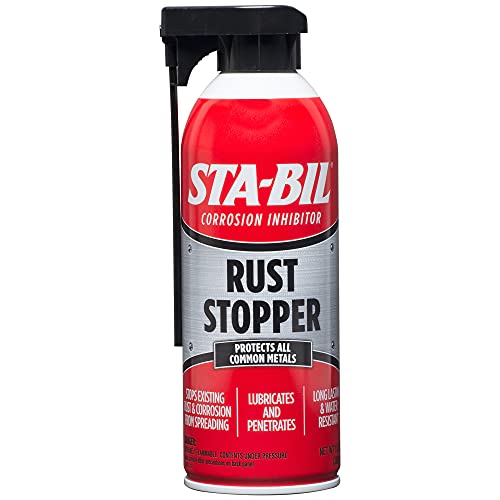
STA-BIL Rust Stopper 13 oz

Rust-Oleum Stops Rust 2-in-1 Spray

Seymour 16-45 Rust Converter

BLACK STAR Rust Converter 1 Quart

Rust-Oleum Rust Dissolver Jelly 8 oz

MuzeFansi 2-in-1 Rust Converter & Primer
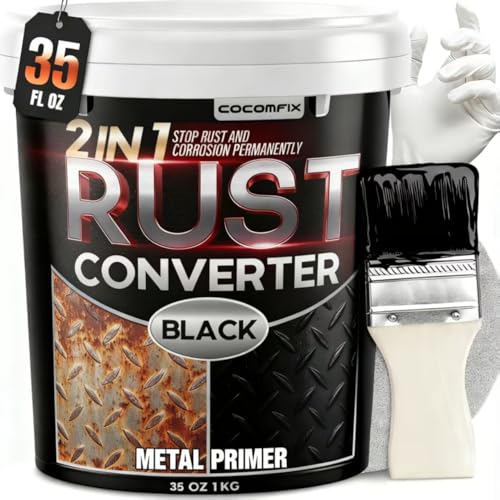
cocomfix Ultra 2-in-1 Rust Converter
More Details On Our Top Picks
STA-BIL Rust Stopper fits the everyday prevention job, especially around battery terminals, exposed metal, and painted surfaces that see moisture. The spray format keeps the process simple, and that matters more than people expect in a garage that already has too many half-finished tasks.
The trade-off is clear, though, it’s built to slow corrosion and protect metal, not to rebuild a badly scaled panel. For commuters, boat owners, or anyone who keeps tools and equipment in damp storage, that narrower role makes it useful rather than flashy.
Strong Points
- Leaves a protective layer that suits routine corrosion control.
- Works on battery terminals, which helps on vehicles that sit outdoors.
- Water resistance helps in wet storage areas and seasonal weather swings.
- The lubricating feel can reduce squeaks and sticking on metal parts.
Things To Consider
- It’s a prevention-first spray, so heavily scaled rust needs another approach.
- Sprays can reach nearby surfaces, so masking helps in tight engine bays.
- The bottle needs sensible storage after opening, especially in busy shops.
Key Specs
Who It Suits Best
You’ll get the most from this spray around cars, bikes, RVs, and boats that need steady corrosion control, not full restoration.
A Better Fit Elsewhere
Rust-Oleum Rust Dissolver Jelly 8 oz suits you better when the rust is already thick on bolts or metal parts and you want a clingier remover.
Rust-Oleum’s 2-in-1 spray leans into sealing as much as rust control, so it makes sense for parts that face moisture and road grime. The rubberized finish gives the coating a more flexible feel than a hard shell, which can suit brackets, underbody edges, and mixed-use automotive parts.
Compared with STA-BIL Rust Stopper, this one behaves more like a coating step than a maintenance spray. The honest read is that it works best on parts you’re ready to cover and leave alone, not on areas you want to keep looking clean and original.
What We Like
- Seals metal in a way that suits exposed automotive parts.
- Rubberized texture adds flexibility for surfaces that see vibration.
- Its moisture barrier helps where water exposure is routine.
- The spray format keeps application straightforward in a home garage.
Room For Improvement
- The black finish may not suit every visible repair.
- Spray coverage can feel messy around trim or adjacent hardware.
- It’s more of a coating solution than a full cosmetic match.
Feature Snapshot
Who It Suits Best
You’ll appreciate this most on vehicles and outdoor metal that need a sealed, weather-conscious finish rather than a bare-metal look.
Another Choice May Suit
Seymour 16-45 Rust Converter suits you better when your goal is turning rust into a paintable base before a full repaint.
Seymour 16-45 is the classic rust-to-primer style converter, so it fits repairs where you want to move from cleanup to paint with less sanding. That black, paintable finish matters on trailers, fences, railings, and vehicle parts where you care about both function and a cleaner next coat.
Compared with the spray-only products above, this one is more about restoration prep than day-to-day protection. You may find the 10-minute touch-dry useful in a small workshop, though the 24-hour topcoat window means patience still matters.
Highlights
- Turns rusted iron and steel into a primer-like base.
- Helps reduce sanding and wire brushing on rough surfaces.
- Dries fast enough to keep a repair moving.
- Works across vehicle and property maintenance jobs.
Points To Note
- It asks for the loose rust to be removed first, so prep still matters.
- The painted finish needs a wait before the topcoat goes on.
- Black conversion may show through where you want a lighter finish.
At A Glance
Built With In Mind
You’ll like this most for repaint projects on metal structures and automotive parts where you want a converter, not just a coating.
Where A Sibling Pick Shines
BLACK STAR Rust Converter suits you better when you want a quart-size option for broader steel surfaces and a more straightforward restore-and-coat job.
BLACK STAR leans into coverage, and that makes it sensible for larger steel jobs where a small bottle would feel fiddly. For chassis sections, fence posts, or broad repair patches, a quart can be easier to live with than repeated small refills.
Unlike Seymour’s faster primer-style path, this one is more about practical volume and broad steel compatibility. The trade-off is that you need enough space and patience to handle a larger coating job cleanly, which matters in cramped garages.
Best Bits
- Quart size suits broader repair areas and repeat projects.
- Designed for steel surfaces, which covers many vehicle and shop uses.
- The simpler format keeps the focus on the repair itself.
- Useful for property hardware as well as automotive work.
Small Caveats
- The larger container can feel unnecessary for tiny touch-ups.
- You’ll want decent prep space to keep the application controlled.
- It’s a conversion product, so cosmetic finish expectations should stay practical.
Details At A Glance
Who Should Grab It
You’ll benefit most here if you handle bigger steel surfaces and want a no-nonsense converter for repair work.
Look Elsewhere When
Rust-Oleum Rust Dissolver Jelly 8 oz suits you better for small hardware and tight spaces where a clingy remover makes cleanup easier.
This jelly takes a different path from the converters above, because it’s built to remove rust from metal rather than leave a converted coating behind. The thick texture matters on bolts, grills, bike parts, and other awkward shapes where a thin liquid would run off too quickly.
For a garage bench, that cling is the whole point, especially on parts with light to medium rust that you want rinsed clean before repainting. Heavier buildup may need another pass, so this feels more like a careful prep step than a one-and-done fix.
Reasons To Buy
- The jelly texture keeps it on vertical and uneven metal longer.
- It suits small hardware and tight mechanical parts very well.
- Rinse-and-wipe cleanup helps leave a paint-ready surface.
- Useful for mixed household and automotive metal repairs.
Softer Spots
- Deep rust can take more than one pass.
- It’s not the right fit for large conversion-and-coat projects.
- Rinsing means you need a cleanup step, not just application.
Core Details
The Right Fit
You’ll like this most for bolts, tools, and small automotive parts where cling and cleanup matter more than volume.
Skip It When
Seymour 16-45 Rust Converter suits you better for a rust-to-primer workflow on larger iron or steel pieces that you plan to paint.
MuzeFansi moves into larger-project territory with a 2-in-1 formula, so it suits people who want both rust conversion and a primer layer in one product. That makes sense for automotive, marine, industrial, fence, and farm equipment work where the surface area can get big fast.
The size helps, but the real appeal is the way it bridges repair and repainting, which keeps you from juggling too many separate coatings. You may find it more product than you need for a tiny rust spot, though that’s the usual trade-off with bigger, more versatile cans.
Positives
- Combines converter and primer in one workflow.
- Fits larger jobs across vehicle and property metal.
- Heat and UV resistance suit outdoor exposure.
- The 35 oz size gives you room for coverage.
- Helpful for people who want fewer product changes mid-project.
Honest Caveats
- The larger format can be more than you need for touch-ups.
- More capacity also means more storage space on the shelf.
- Big repair projects still call for careful surface prep.
Feature Rundown
Whose Shelf It Belongs On
You’ll get the most value from this in a workshop or garage that handles bigger rust repair jobs on outdoor metal.
Swap It Out When
Rust-Oleum Rust Dissolver Jelly 8 oz suits you better for tight hardware, where a smaller rust remover is simpler to control.
cocomfix aims squarely at frame-level work, and that focus helps it stand apart from the more general converters in this list. The included tools, matte black finish, and heat-stable approach point toward a repair kit mindset rather than a simple bottle-and-brush job.
That framing is useful for chassis, trailer, and truck areas where the rust repair is only part of the task. For most garage projects, it makes sense when you want a more structured kit, though the specialized angle may be more than you need for casual touch-ups.
Standout Traits
- Built around frame, trailer, and truck repair work.
- Includes tools, which helps with a more complete setup.
- The 35 oz size supports substantial coverage.
- Matte black finish suits hidden underbody or structural areas.
- Heat-stable positioning makes it relevant for tougher vehicle zones.
Areas To Watch
- The kit style can be more involved than a basic spray.
- It may be broader than needed for small household metal fixes.
- Storage and cleanup make more sense for a dedicated repair session.
Technical Sheet
Made For
You’ll like this most if your rust work centers on frames or chassis and you want a more involved repair kit.
Where Shoppers Go Wrong
STA-BIL Rust Stopper suits you better when your priority is routine corrosion control on terminals and exposed metal instead of a frame repair kit.
How To Choose The Right Car Rust Converters
Match The Product To The Rust Level
Rust converters do not all do the same job, and that’s where people waste time. A prevention spray like STA-BIL suits exposed metal and terminals, while a rust-to-primer product like Seymour fits a repaint path after you remove loose scale.
Heavy buildup on bolts, brackets, or frame sections often calls for a remover such as Rust-Oleum Rust Dissolver Jelly before any coating step. The material, not the brand name, should drive the choice.
Choose The Right Format For The Job
Sprays are fast and convenient, especially for awkward spots and maintenance tasks. Jellies cling better to vertical parts and threaded hardware, so they suit jobs where run-off would get in the way.
Quart-size coatings make more sense for fence lines, trailers, or bigger underbody repairs. Smaller containers are easier to store and waste less product on spot fixes.
Think About Finish And Next Steps
Some products leave behind protection, while others create a paintable base. If you plan to repaint, a converter or primer combination saves a step, but it still needs proper cure time and decent surface prep.
For a cleaner-looking repair on visible parts, finish color matters too. Black conversion can disappear nicely on hidden metal, yet it may stand out on body panels or bright surfaces.
Keep Maintenance And Storage In View
Corrosion control works best as part of a routine, not a one-time rescue. Vehicles parked outside, boats stored near moisture, and tools kept in sheds all benefit from products that are easy to reapply or store safely.
Opened containers also matter more than people expect. A bottle that stays useful after opening gives you more flexibility, while larger formats reward you only when the repair backlog is real.
What To Weigh Before You Choose
Common Shopping Slip Ups
A frequent mistake is treating a rust remover and a rust converter like the same thing. They solve different problems, so the wrong pick can leave you with clean metal that still needs protection, or protected metal that still needs rust removal.
Another miss is choosing a tiny bottle for a large frame or fence job. That usually turns into extra cleanup, extra runs to restock, and a messier finish than you planned.
What The Higher Tier Buys
More expensive options in this category usually bring more product, more task flexibility, or a more complete repair setup. That extra spend often shows up in better coverage for bigger jobs, or in a kit that bundles the tools you’d otherwise hunt down separately.
For larger vehicles, underbody work, or outdoor metal that needs a more durable workflow, that added capacity can be worth it. For a small terminal touch-up, it usually isn’t.
Frequently Asked Questions
What Is The Difference Between A Rust Converter And A Rust Remover?
A converter changes rusted metal into a stable coating that can often be painted. A remover strips rust away so the surface can be rinsed or wiped clean.
Can You Paint Over A Rust Converter?
Yes, many converters are made for paint-ready repairs after they dry and cure. Seymour 16-45 is the clearest fit in this list for that kind of workflow.
Do You Need To Remove Loose Rust First?
Yes, loose scale usually needs to come off before a converter or coating does its job well. That prep step makes the repair more even and keeps the coating in contact with the metal.
Which Option Works Best For Tight Hardware?
A thick rust dissolver jelly is the easier choice for bolts and threaded parts. Rust-Oleum Rust Dissolver Jelly stays put better than a thin spray.
Which Option Fits Routine Prevention Best?
STA-BIL Rust Stopper suits maintenance use on terminals and exposed metal. It is more about keeping corrosion from spreading than rebuilding a badly damaged surface.
Final Thoughts
Your best match depends on the kind of rust sitting in front of you. A spray, a converter, and a jelly all solve different problems, and that’s the whole point of this list. Start with the surface, the repair size, and whether you want prevention, conversion, or removal. Once you line those up, the right product tends to reveal itself quickly.
