

Some setups need a simple bridge, not a full system swap. That’s where this roundup helps, whether you’re fitting D-size battery gear with AA cells or connecting older audio hardware to a modern TV or console.
You’ll see compact battery holders and analog-to-digital, plus digital-to-analog, audio converters side by side, because the real job is matching the right adapter to the right equipment. The best fit depends on your device ports, your power needs, and how much space you have behind the shelf or inside the battery bay.
Quick Look At The Shortlist

3AA LR6 to D Size Battery Converter Adapter Holder Pack of 4

6pcs 3 AA to D Size Parallel Battery Convertor Adapter Holder

SACKORANGE 10 Pack AA to D Size Battery Spacer Converter Case
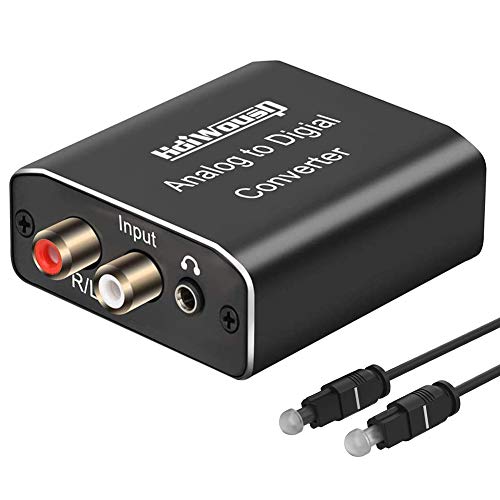
Hdiwousp Analog to Digital Audio Converter RCA and 3.5mm

VPFET Analog to Digital Audio Converter RCA to Optical
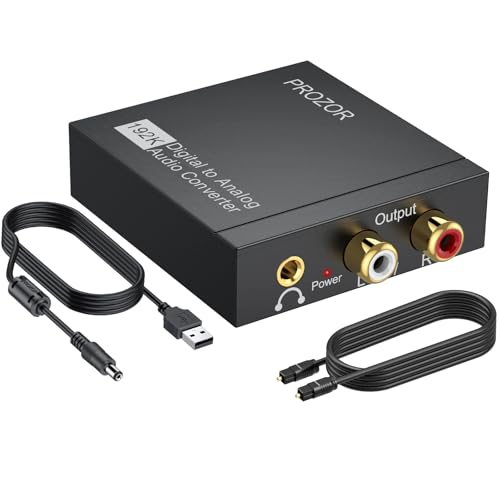
PROZOR 192KHz Digital to Analog Audio Converter

192kHz DAC Digital to Analog Audio Converter with Optical Cable

DIANN 10pcs 3 AA to D Battery Converter AA to D Battery Adapters Holder
More Details On Our Top Picks
Battery holders like this make sense in homes where D-size devices still earn their keep. The big advantage is flexibility, because you can use one, two, or three AA cells depending on the device and the runtime you want.
That makes it handy for flashlights, toys, and storage drawers that need a quick workaround without changing the whole device. The trade-off is simple, more AA cells mean more setup and more battery swaps, so this suits practical setups better than hands-off convenience.
Strong Points
- Works with one, two, or three AA cells, so you can match the battery arrangement to the gear you already own.
- Four holders in the pack give you a little breathing room for spares or matching devices.
- It helps keep older D-size devices in service without replacing the hardware.
Points To Note
- Using more AA cells can mean more cost and more swaps over time.
- The setup only helps where the battery compartment has room for this style of adapter.
Feature Snapshot
Who It Suits Best
Households that still use D-size gear and want a flexible AA workaround will get the most from this pack.
A Better Fit Elsewhere
DIANN 10pcs 3 AA to D Battery Converter AA to D Battery Adapters Holder suits shoppers who want more pieces in one bundle for everyday household use.
Compared with the first holder, this Coliao set leans harder into quantity and matching use across several devices. The 1.5V output wording matters because many battery-powered items expect that familiar voltage from a D-size cell, so the adapter is built to stand in for that shape and output style.
In a garage drawer or a family toy bin, six pieces can keep the same setup moving without constant reshuffling. The catch is that this set focuses on the 3 AA to 1 D pattern, so it’s less adaptable than the DSLRKIT pack above.
Bright Spots
- Six holders help cover multiple devices or keep extras nearby.
- The 3 AA to 1 D arrangement suits devices that need a fuller battery stack.
- Simple holder-style design keeps the replacement process straightforward.
Room For Improvement
- It does not offer the one, two, or three AA flexibility seen in the DSLRKIT pack.
- Bulk storage matters, because extra holders can clutter a small drawer.
Feature Card
Built With In Mind
Families or hobby spaces that use several battery-powered items with the same D-size slot will find this format handy.
Swap It Out When
SACKORANGE 10 Pack AA to D Size Battery Spacer Converter Case suits you better when you want a larger pack of simpler spacer-style holders.
This SACKORANGE pack looks especially practical for rechargeable battery setups, because the spacer style keeps the conversion simple. It behaves more like a fill-in sleeve than a full adapter system, which is exactly what some battery bays need and nothing more.
You may find that simplicity helpful in remote controls, lights, and other everyday gear where the battery compartment just needs the cell sized out correctly. The trade-off is that it’s more about spacing than versatility, so it suits straightforward jobs better than mixed battery arrangements.
Upsides
- Ten pieces make it easy to keep a few in different rooms or project bins.
- The spacer-style format stays easy to understand for everyday use.
- Good fit for rechargeable battery routines where simple sizing is the main need.
Softer Spots
- It focuses on spacing, so it offers less flexibility than holder sets that support multiple AA counts.
- Loose storage can be a small hassle, because small spacers tend to get separated in drawers.
Core Details
Right Fit For
People who use rechargeable AA cells in D-size devices and want a straightforward spacer solution will get the most from this set.
Where A Sibling Pick Shines
DIANN 10pcs 3 AA to D Battery Converter AA to D Battery Adapters Holder works better for you when you want a sturdier holder with spring and shell construction.
Audio conversion gets more interesting here, because this Hdiwousp unit moves analog stereo into both coaxial and Toslink optical formats at the same time. Coaxial uses an electrical digital signal over an RCA-style line, while Toslink sends the signal through optical cable, so the adapter gives you two paths from one source.
For a game console, DVD player, or older TV hookup, that dual-output layout can make cabling easier than juggling separate boxes. The aluminum shell is a nice practical touch, though the flip side is that you need the rest of your audio chain to match the output format you plan to use.
What We Like
- Converts RCA left-right or 3.5 mm analog input to digital coaxial and optical output together.
- Supports 8 to 96 kHz sampling rates, which gives you a broad range for common home audio setups.
- Aluminum housing should suit shelves and media cabinets where heat and durability matter.
Small Caveats
- It only works in the analog-to-digital direction, so it won’t help for digital sources that need the reverse path.
- Your receiver or sound system needs the right input on the other end, or the extra output option goes unused.
Details At A Glance
Who Should Grab It
Home theater setups with older analog sources and a digital receiver will benefit most from this style of converter.
A Better Fit Elsewhere
VPFET Analog to Digital Audio Converter RCA to Optical with Cable fits you better when you want a simpler soundbar connection with fewer input choices to sort through.
Against the Hdiwousp unit, this VPFET pick reads a little more focused for a soundbar-style setup. The inclusion of cable in the title suggests a more ready-to-place kit, and that matters in a TV stand where you want fewer loose parts.
It also covers RCA and 3.5 mm AUX input, then sends the signal out to optical and coaxial paths, so your source can be older without making the whole system feel dated. The trade-off is the usual one for this category, the converter solves format mismatch, but it still depends on the rest of your gear being on speaking terms.
Highlights
- RCA and 3.5 mm input support keeps it useful with several common home audio sources.
- Optical and coaxial output choices give you room to match the receiver or soundbar.
- The cable-included setup is convenient for tight entertainment centers.
Areas To Watch
- It still depends on the rest of the audio chain, so it’s not a standalone fix.
- Extra cables can make cable management a little busy behind a TV cabinet.
Feature Rundown
The Right Fit
Small home theaters and soundbar setups that need a straightforward analog-to-digital bridge suit this VPFET model well.
Another Choice May Suit
Hdiwousp Analog to Digital Audio Converter RCA and 3.5mm fits you better when you care more about the aluminum housing and the clearly stated sampling range.
This PROZOR unit flips the direction of the earlier converters, which makes it the right kind of tool for older amplifiers, speakers, or receivers that need analog output from a digital source. Its 192 kHz support points to a higher-input digital path, so the appeal is less about casual adapters and more about cleaner integration with home cinema gear.
The dual analog outputs, L/R RCA and 3.5 mm, give you room to connect different downstream equipment without adding extra splitters. That said, digital-to-analog conversion is only useful when your source is optical SPDIF, so it’s a better match for people who already know the signal chain they’re building.
Best Bits
- Converts optical SPDIF input to analog RCA and 3.5 mm output.
- 192 kHz support makes it a strong fit for more demanding home audio chains.
- Two analog output styles add flexibility for amps, speakers, and small receivers.
- The format is tidy for media shelves where a compact converter helps reduce clutter.
Honest Caveats
- It only handles digital-to-analog use, so it does not work as a two-way box.
- Your source device must provide optical SPDIF output for this to earn its place.
Technical Sheet
Whose Shelf It Belongs On
Home theater setups with optical sources and older analog inputs will benefit most from this PROZOR converter.
Reach For A Different Pick When
YGiTK 192kHz DAC Digital to Analog Audio Converter with Digital Audio Optical Cable suits you better when you want the included cable and the amplified RCA output style.
YGiTK adds a useful twist over the PROZOR unit, because the title calls out a digital audio optical cable and RCA female plus 3.5 mm output support. That makes it feel more ready for a TV bench or console shelf where you want fewer missing pieces and a little less setup friction.
The built-in audio amplification chipset is the detail that stands out most, since it raises the RCA output level rather than leaving you with a bare conversion box. One thing worth considering is that the volume still has to be adjusted on the source side, so this is about signal handling, not a universal volume knob.
Reasons To Buy
- Includes an optical cable, which helps simplify the initial hookup.
- RCA female and 3.5 mm output support broaden compatibility with common analog gear.
- The amplification chipset gives the RCA output a stronger presence in the chain.
- 192 kHz support keeps it in the same higher-end category as the PROZOR model.
Minor Gripes
- Volume changes still happen on the source device, not on the converter itself.
- People who only need a bare adapter may find the added features more than necessary.
Feature Card
Who Will Love This
TV and game console setups that need a cleaner digital-to-analog bridge with a little more output flexibility suit this model well.
Look Elsewhere When
PROZOR 192KHz Digital to Analog Audio Converter fits you better when you want a simpler converter without the cable-plus-amplifier angle.
DIANN lands on the sturdier end of the battery-adapter group, especially with its plastic shell, metal spring, and 3-AA format. The 52 x 32 mm size gives you a concrete sense of the footprint, which matters in battery compartments that leave only a little room to spare.
The impact-resistant, flame-retardant plastic wording is useful to know for everyday handling and storage, though the honest read is that this is still a compact hardware piece that rewards neat organization. For home drawers, toy bins, and repair kits, it feels more confident than the lighter spacer-style SACKORANGE option.
Standout Traits
- Ten holders give you the most generous count in the battery-adapter group.
- Plastic shell and metal spring construction make it feel more secure in regular use.
- The specified 52 x 32 mm size helps with fit planning.
- Its 3 AA to D format matches many common D-size substitutions.
Areas To Watch
- The 3-AA layout is fixed, so it is less flexible than a holder that accepts different AA counts.
- Small parts storage matters, because a 10-piece set is easy to misplace in a crowded toolbox.
Core Details
Made For
People who want a durable-looking bulk pack for household devices, storage kits, or repetitive battery swaps should start here.
Where Shoppers Go Wrong
SACKORANGE 10 Pack AA to D Size Battery Spacer Converter Case suits you better when you want the simplest spacer approach rather than a fuller holder build.
How To Choose The Right As To D Converter
Start With The Direction Of Conversion
The first split is simple: battery adapters and audio converters solve completely different jobs. A battery holder helps AA cells sit in a D-size compartment, while an audio converter changes analog to digital, or digital to analog, depending on the model.
That means the right choice starts with the device on your table, not the product name alone. A TV with optical output needs a DAC, while a flashlight or toy that takes D cells needs a battery spacer or holder.
Match The Physical Fit, Not Just The Label
Battery adapters deserve extra attention on size and layout. A holder that accepts one, two, or three AA cells gives you more flexibility than a fixed 3-AA layout, but it also asks for more room inside the compartment.
In audio gear, the physical fit shows up in port types, too. RCA, 3.5 mm AUX, coaxial, and Toslink optical each belong to different setups, and the wrong input or output shape turns a useful box into shelf clutter.
Think About Use Around The House
For busy households, the best choice is usually the one that keeps routine tasks easy. A 10-pack battery adapter helps in toy bins and repair drawers, while a converter with two audio outputs can simplify a media cabinet that already has too many cables.
Maintenance stays modest either way, but storage matters. Small holders and compact converters are easy to misplace, so a labeled drawer or cable pouch can save time later.
Choose For The Setup You Already Own
The cleanest upgrade is the one that fits the gear you already have, not the gear you wish you had. If your stereo still relies on optical input, a digital-to-analog converter makes more sense than a battery adapter, and the reverse is true for household power gear.
That’s the real filter here, compatibility first, features second. Once you know the direction, the rest becomes a question of count, material, and how much convenience you want built into the shape.
A Quick Reality Check Before You Shop
Wrong Turns To Avoid
Many shoppers get tripped up by direction. A battery adapter won’t help with audio gear, and an audio converter won’t fit in a battery bay.
Another common miss is overlooking port shape or battery space. A compact-looking unit can still be wrong for a tight compartment or a receiver that only accepts one style of input.
Where The Extra Money Goes
Higher-tier models usually add stronger housing, more connection options, or a more thoughtful accessory bundle. In audio gear, that can mean aluminum shells, multiple outputs, or an included cable, while in battery adapters it often means sturdier shells and better spring hardware.
The upgrade makes sense when the device stays in regular rotation. For a home theater rack or a drawer full of repeating battery jobs, paying a little more for easier handling can save annoyance later.
Frequently Asked Questions
What does an As To D Converter do?
In this roundup, the battery version lets AA cells stand in for a D-size battery. The audio version changes signal type between analog and digital formats.
Do all battery adapters accept the same number of AA cells?
No, some accept one, two, or three AA cells, while others are fixed to a 3-AA layout or a spacer style. The fit depends on the adapter design and the device’s battery bay.
What ports matter in an audio converter?
RCA, 3.5 mm AUX, coaxial, and Toslink optical are the main ones in this roundup. You need the input and output format that matches your source and your receiver.
Is a higher sampling rate always better?
Not automatically, because the rest of the audio chain has to support the same path. A higher number only helps when your source and downstream gear can use it.
Which type works better for a simple home setup?
For battery gear, a pack like DIANN or SACKORANGE keeps things straightforward. For audio, VPFET is a tidy fit for a basic TV or soundbar connection.
Closing Thoughts
The right As To D Converter is the one that matches your gear without adding extra steps. For battery use, that means thinking about AA count, shell style, and compartment size, while audio setups depend on signal direction and port match. The strongest picks here stay useful because they solve one problem cleanly instead of pretending to do everything. Choose the one that fits your setup, and the rest tends to fall into place.
