

You’re likely comparing inverter and converter setups because an RV electrical system gets complicated fast, especially once you start mixing wall outlets, battery charging, and small appliances. The right pick depends on whether you need AC power from a 12V source, smarter battery charging, or a cleaner sine wave for sensitive gear. That split matters on a rainy campsite, during a long road day, or while keeping the coach ready between trips.
Quick Look at the Shortlist

TOPBULL 3000 Watt Power Inverter

PowerMax PM4-55A 55A Deck Mount RV Converter Charger Lithium

BELTTT 2000W Pure Sine Wave Inverter
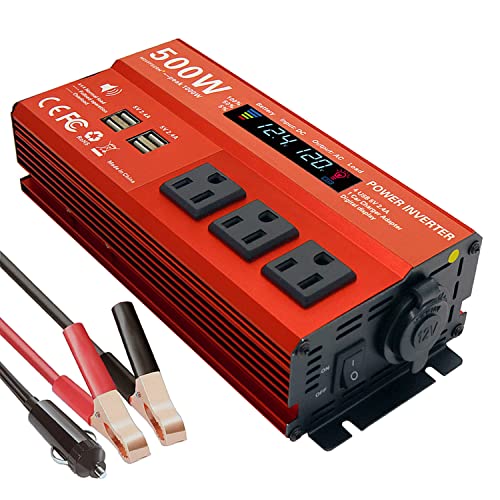
MOVFFGGRM 500W Peak 1000W Power Inverter
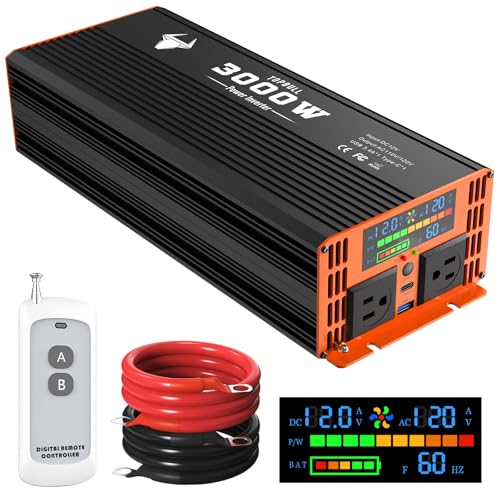
TOPBULL 3000 Watt Power Inverter

suplife WF-8955-MBA 55 Amp Power Converter

BELTTT 3000W Pure Sine Wave Inverter

suplife 2026 Upgrade WF-9855 55 Amp RV Power Converter
More Details On Our Top Picks
The long remote lead is the first thing you notice here, and that’s useful in an RV where the inverter may sit in a storage bay instead of beside your couch. Dual AC outlets plus a USB port give you enough flexibility for charging gear and running smaller appliances without crowding one outlet. The trade-off is plain, though: a 3000W class unit asks for careful load planning, so it suits owners who already know what they want to power.
The LED display helps you keep an eye on the setup without digging around the compartment, and the included cables reduce the usual parts hunt. TOPBULL’s dual smart fans matter in a cramped coach cabinet, where heat management tends to be part of the conversation. For most weekend rigs or mobile work setups, this feels like a serious utility pick rather than a casual plug-in accessory.
Strong Points
- Remote access makes tucked-away mounting easier.
- Two AC outlets help spread out small loads.
- USB charging keeps phones and tablets simple on travel days.
- LED readout gives quicker status checks in dim storage spaces.
- Included cables help shorten the install list.
Areas To Watch
- The higher output calls for more careful appliance matching.
- Fan noise can matter in quiet sleeping areas.
- Cabinet placement needs enough room for airflow.
Feature Card
Who It Suits Best
RV owners setting up a semi-permanent power station for mixed travel and home backup use will get the most out of this one.
A Better Fit Elsewhere
BELTTT 3000W Pure Sine Wave Inverter suits you better when sensitive electronics and a cleaner output matter more than remote reach.
Unlike the inverter-style picks above, this one lives on the charging side of the RV power story, and that distinction matters. PowerMax built it as a deck-mount converter charger, so it’s aimed at feeding clean 12V DC and managing battery charging rather than creating AC wall power. That makes it a smart match for owners who want a more direct battery-focused replacement.
The adjustable charging behavior is useful in rigs that may see lead-acid today and lithium later, though the setup details deserve attention because charger compatibility is never something to skim past. In a coach that sits between road trips, this sort of unit helps keep the electrical side organized without a lot of fuss. The honest read is that it’s more specialized than a full inverter, which is exactly why the fit can be so good.
What We Like
- Deck-mount layout suits built-in RV electrical bays.
- Adjustable charging works across battery chemistries named by the maker.
- Clean 12V DC output supports coach electronics and lighting.
- Battery-focused design keeps the job straightforward.
Small Caveats
- It charges batteries, so it does not replace an AC inverter.
- Installation comfort level matters in a tighter electrical compartment.
- Battery type matching needs a quick double-check before setup.
Core Details
Built With In Mind
RV owners replacing a built-in converter charger in a battery bay will find this the most natural match.
Another Choice May Suit
suplife WF-8955-MBA fits better for a lead-acid focused replacement where you want a direct compatibility story.
Pure sine wave means the inverter aims to mimic utility-style AC more closely than a basic modified wave unit, and that’s valuable around sensitive electronics. BELTTT pairs that with dual AC outlets, a 20A socket, USB charging, a hardwire port, and a remote controller, so the package feels more like a real power hub than a simple converter. For RVs that carry laptops, chargers, or gear that dislikes dirty power, that cleaner output can be the deciding point.
The 2000W rating keeps it in a more manageable range than the 3000W units above, which can be a relief in smaller rigs or lighter installs. Surge capacity is listed at 4000W, so short startup loads have some cushion, but your actual appliance mix still deserves attention. Worth noting though, the extra connection options add flexibility while also asking for a tidier installation.
Positives
- Pure sine wave output suits sensitive devices.
- Dual AC outlets help separate everyday loads.
- 20A socket adds a useful connection point for RV gear.
- USB port covers smaller charging needs without adapters.
- Hardwire option supports a cleaner installed setup.
Room For Improvement
- The broader feature set can take more planning during install.
- Remote and hardwire options may be more than casual users need.
- Cabinet ventilation still deserves respect during long use.
Details At A Glance
Right Fit For
Travelers who want cleaner AC for electronics and a more flexible mounting plan should look closely at this one.
Where A Sibling Pick Shines
BELTTT 3000W Pure Sine Wave Inverter is the stronger match for heavier rigs that need the extra output and remote cable reach.
This is the smallest and simplest unit in the roundup, and that makes it appealing for road trips where you mainly want to charge phones, tablets, or small accessories. Four USB ports plus a single AC outlet and a cigarette lighter socket create a very plug-in-friendly layout, so you’re not juggling extra adapters right away. It suits lighter travel use better than full-on appliance duty.
The 500W continuous figure and 1000W peak rating keep expectations grounded, which is helpful because this style of inverter is all about convenience first. In a day-to-day vehicle setup, the main upside is how little space it asks for, while the main compromise is obvious headroom. For a compact camper van or a backup travel kit, that trade feels reasonable.
Highlights
- Small footprint fits tight dash and storage areas.
- Four USB ports simplify multi-device charging.
- One AC outlet handles a basic corded device.
- Cigarette lighter port adds another common connection option.
Minor Gripes
- Lower output keeps it in the light-duty lane.
- One AC outlet limits simultaneous household-style use.
- Best results come from keeping the load modest.
Quick Facts
Whose Shelf It Belongs On
Drivers who want a compact travel inverter for light charging and occasional low-draw devices will appreciate the simplicity here.
Look Elsewhere When
TOPBULL 3000 Watt Power Inverter makes more sense for RV owners who need real appliance headroom and remote mounting.
Compared with the earlier TOPBULL unit, this version leans harder into mixed-use RV and off-grid setups with a 6000W surge rating, LCD display, and a USB-A port. That combination gives you a little more confidence around startup loads while keeping the interface straightforward to read in a cabinet or bay. For a rig that shifts between solar support, home backup, and road use, the broad fit is its main appeal.
Two AC outlets make it easier to split up a coffee maker, laptop charger, or other small loads, and the included cable saves another parts search. The trade-off is the same one you get with most high-output inverters, more power usually means more attention to ventilation and load discipline. The honest read is that it lands well for RV owners who want flexibility without moving into a specialty build.
Best Bits
- 6000W surge adds useful startup headroom.
- LCD display keeps status information visible at a glance.
- USB-A port covers smaller charging needs.
- Two AC outlets help manage a few devices at once.
- Included cable makes setup a little less awkward.
Points To Note
- High-output units need careful load matching.
- Cabinet placement should allow for airflow around the fans.
- It overlaps with the other TOPBULL model, so your use case should decide the better fit.
Spec Overview
Perfect Match For
RV owners who want a high-output inverter for varied jobs, not just one narrow setup, should feel at home with this pick.
Another Choice May Suit
BELTTT 2000W Pure Sine Wave Inverter fits better for sensitive electronics where cleaner AC matters more than raw surge size.
This one stays very focused on replacement use, which is exactly why it belongs in a serious RV shortlist. It’s a 55 amp converter built for the WF-8955PEC path, with three-stage smart charging for lead-acid battery setups. That makes it less about variety and more about keeping a specific coach system running the way it should.
Three-stage charging usually means the unit can move through bulk, absorption, and float style behavior, terms that describe how battery charging is managed over time. You do not need to love the jargon to appreciate the result, steadier charging and less babysitting during routine parking cycles. The caveat is simple, though, it serves a narrower install lane than the inverter picks earlier in the list.
Reasons To Buy
- Direct replacement focus helps narrow the search.
- 55 amp output suits RV battery charging needs.
- Three-stage charging supports more controlled battery upkeep.
- Compatibility with named WF models makes matching clearer.
Worth Noting
- It is a converter, not a household AC inverter.
- Lead-acid focus leaves less room for broader battery plans.
- Replacement jobs work best when the model match is checked carefully.
Technical Sheet
Best Suited To
RV owners replacing a matching lead-acid converter in a coach electrical bay will get the clearest value from this model.
Skip It When
PowerMax PM4-55A makes more sense for setups that need broader battery chemistry support and a different mounting style.
This is the more fully loaded BELTTT option, and the 23-foot remote cable is the feature that changes how you plan the install. In an RV bay or under-seat mounting spot, that extra reach makes the controller easier to place where you can actually use it. The rest of the package, including dual AC outlets, a 20A socket, USB charging, and a hardwire port, points toward users who want one unit to cover a lot of ground.
Pure sine wave output keeps it in the same cleaner-power lane as the 2000W BELTTT model, but the higher 3000W class opens the door to more demanding setups. That said, more capability can also mean more wiring thought and more heat-management awareness. For a larger coach or a mixed solar-and-RV system, the extra room can feel worth it.
Standout Traits
- 23-foot remote cable gives placement freedom.
- Pure sine wave output supports electronics that prefer cleaner AC.
- Dual AC outlets and a 20A socket add flexibility.
- USB port keeps small-device charging simple.
- Hardwire port helps with installed RV setups.
Softer Spots
- The broader feature set makes setup more involved.
- High output means you still need sensible appliance planning.
- The long cable is helpful, but it also adds another part to route neatly.
Core Details
Who Should Grab It
Travelers with larger power needs and room for a more involved install will get the most from this model.
Swap It Out When
BELTTT 2000W Pure Sine Wave Inverter fits better for a smaller rig that values cleaner power but not quite as much output.
This suplife converter is built for a replacement job, not a fresh-slate experiment, and that focus helps narrow the decision. It targets the WF-9855 family and related WF-9800 series models, which is exactly the kind of compatibility detail that saves time in an RV electrical bay. For lead-acid battery setups, that kind of specificity is often the whole point.
The 55 amp rating puts it in the same practical charging class as the PowerMax and WF-8955 options, but the model-match story is different. That means your real choice here is less about raw output and more about matching the existing hardware path in your coach. The trade-off is narrow compatibility, which is also the strength.
Bright Spots
- Designed around common WF replacement paths.
- 55 amp output suits RV charging needs.
- Lead-acid focus keeps the use case clear.
- Compatibility list helps reduce guesswork during replacement.
Areas To Watch
- It is intended for a specific replacement lane.
- Lead-acid focus means it is not the broadest battery match.
- Careful model checking matters before you tear into the panel.
At A Glance
Made For
Owners replacing a named WF converter in a lead-acid RV system will find the fit language the most reassuring part.
Where Shoppers Go Wrong
PowerMax PM4-55A is the better detour for anyone who needs a deck-mount charger with wider battery chemistry support.
How To Choose The Right Power Inverters For Rv
Match Output To Your Actual Loads
The first decision is output, and it’s less glamorous than remote controls or LCD screens, but it matters more. A 500W unit like MOVFFGGRM suits chargers and light accessories, while 2000W and 3000W models from BELTTT or TOPBULL open the door to heavier gear. In an RV, that gap changes how many items can run at once and how much startup headroom you have.
Pure sine wave matters too, especially for laptops, audio gear, and anything with a sensitive power supply. Modified-style units can work for simpler jobs, but cleaner AC usually gives you a calmer setup around delicate electronics. The trade-off is cost and complexity, so you’re paying for compatibility, not just raw watts.
Separate Inverters From Converter Chargers
Some RV power products create AC from a 12V battery, while others focus on charging and feeding 12V DC back into the coach. That difference is why TOPBULL and BELTTT sit in the inverter camp, while PowerMax and the suplife converters are replacement charging tools. Mixing those jobs up is the fastest way to end up with the wrong box.
For a parked RV with battery maintenance needs, a converter charger usually makes more sense than a high-output inverter. For road travel and appliance use, the inverter is the better lane. Once you separate those jobs, the shortlist gets much easier to read.
Think About Mounting, Cooling, And Access
Remote controls, hardwire ports, and long controller cables matter because RV power hardware often lives in awkward places. A 23-foot remote cable or a 200-foot remote lead gives you more placement freedom, and that freedom helps in tight bays or storage compartments. Cooling matters just as much, since heat builds fast in closed cabinets and under-seat spaces.
Look at how you’ll check status, route cables, and reach the unit after installation. LED or LCD displays help with quick checks, while included cables reduce the parts list. Small details like those often decide whether a setup feels tidy or annoying six months later.
Plan Around Battery Type And Coach Compatibility
Converter chargers and replacement units are only useful when they line up with your existing RV system. PowerMax PM4-55A supports lead-acid and lithium batteries, while the suplife WF units focus on lead-acid replacement paths and named WF series compatibility. That kind of detail is the difference between a smooth swap and a return trip to the wiring diagram.
Existing model numbers matter more than flashy output claims in this part of the category. Check the label on the old unit, the battery type in the coach, and the install space before you commit. It’s a little mundane, but it saves a lot of hassle.
Things Worth Knowing First
Mistakes Worth Dodging
One common slip is buying inverter watts you never plan to use, then discovering the unit needs more space, more ventilation, and more wiring than your coach can comfortably give. Another is picking a converter charger when you actually need AC output, or the other way around. The easy fix is to name the job first, then match the hardware.
Another trap is ignoring cable reach and mounting position. A remote control sounds minor until the inverter sits in a bay you dislike opening every time, and then it becomes a daily annoyance. That’s why placement details deserve as much attention as output numbers.
When Paying More Pays Off
The higher-tier models in this list usually cost more because they bring cleaner power, stronger surge headroom, better controls, or more install flexibility. BELTTT’s pure sine wave units and the larger TOPBULL inverter lines are good examples, since they add output structure and convenience features that lighter units skip. You’re not just paying for more watts, you’re paying for easier ownership.
That upgrade makes sense when your RV carries electronics, uses harder-starting appliances, or runs power gear in a fixed install. It also helps when you want a unit that feels less improvised and more like part of the coach. For simple charging, though, a converter charger can be the smarter spend.
Frequently Asked Questions
What size inverter works for an RV?
The right size depends on what you want to run, from phone charging to small appliances or heavier kitchen gear. A bigger number helps with startup load, but only a real load list tells you whether you need 500W, 2000W, or 3000W.
Do you need pure sine wave in an RV?
Pure sine wave is a strong fit for laptops, audio equipment, and other sensitive electronics. Simple chargers and basic accessories may not need it, but cleaner output usually gives you more flexibility.
What is the difference between an inverter and a converter charger?
An inverter turns 12V battery power into AC power for household-style devices. A converter charger does the opposite job inside the coach, feeding and managing the battery side.
Can you replace an RV converter with any similar model?
No, the model family and battery type need to match the coach setup closely. A WF replacement unit, for example, makes sense only when the existing electrical system lines up with that series.
Why does mounting style matter so much?
Mounting style changes how easy the unit is to install, cool, and reach later. Deck-mount and hardwire choices work well in built-in RV spaces, while plug-in styles suit lighter portable use.
Closing Thoughts
Your best choice depends less on brand names and more on the job your RV power setup actually has to do. A compact inverter works for charging and small accessories, while a pure sine wave model gives you a cleaner path for sensitive electronics. Converter chargers belong in the battery-management lane, and that distinction keeps the decision honest. Pick the unit that matches your wiring, your storage space, and the way you travel most often, and the rest of the setup tends to feel much calmer.
