

Car charger inverters make long drives a lot easier when your phone, laptop, camera gear, or small accessories all need power at once. The right one keeps cords under control, fits your vehicle cleanly, and gives you enough AC and USB output for real travel days, not just short errands. That matters whether you commute daily, work from the back seat, or pack the car for a family trip.
Quick Look At Our Shortlist


DrimMek 300W Car Power Inverter
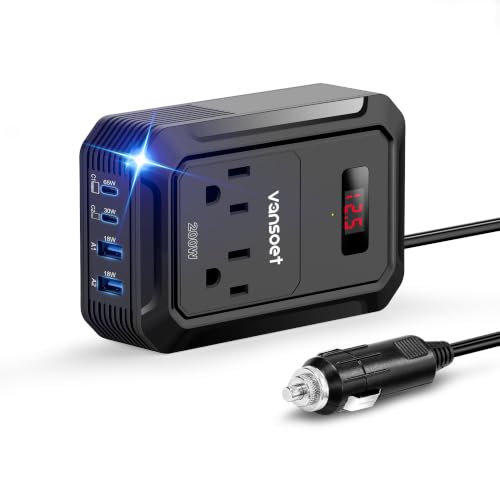
vansoet 200W Car Power Inverter
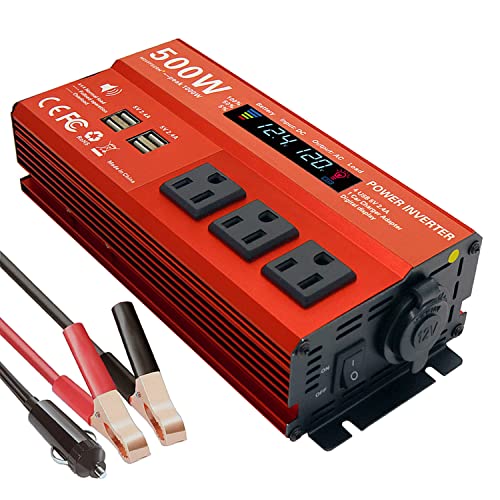
MOVFFGGRM 500W Peak 1000W Power Inverter


vansoet 400W Car Power Inverter

vansoet 400W Power Inverter

PiSFAU 300W Car Power Inverter
More Details On Our Top Picks
The FSATBTNE model makes sense for family trips and busy commutes because it pairs two AC outlets with both USB-C and USB-A charging. The 65W USB-C port can suit laptops that accept higher-wattage charging, while the 18W QC USB-A port covers phones and smaller gear without hogging the AC sockets. You may find the mix especially handy in a cabin packed with devices.
Compared with the lighter 200W and 300W picks below, this one gives you more breathing room for mixed use without jumping into the heavier-duty tier. The trade-off is simple: more output usually means a slightly bulkier footprint, so neat cable routing matters. That said, it looks like a sensible bridge between compact travel use and more demanding road power needs.
Strong Points
- Two AC outlets help you split power between small appliances and chargers.
- 65W USB-C support fits modern laptops that charge through USB-C.
- 18W QC USB-A adds a quick top-up path for phones and tablets.
- The 400W class works well for road trips with several devices in play.
- It gives you more flexibility than the 200W option from vansoet.
Things To Consider
- The broader feature set can take up more visual space in smaller dashboards.
- Two AC sockets invite extra cord management, so tidy placement helps.
- Larger power inverters usually make more sense for mixed loads than for one-phone charging.
Feature Rundown
Who It Suits Best
You benefit most here if you travel with a laptop, a phone, and another small device at the same time.
Where A Sibling Pick Shines
DrimMek’s 300W Car Power Inverter suits lighter daily charging better, especially in tighter cabins where a simpler setup feels easier.
DrimMek keeps the formula lean, which suits daily driving more than gadget-heavy road setups. The 300W output gives you a useful middle ground, and the 65W USB-C port is the detail that helps it stand out for laptop commuters. An LED display can also make status checks easier at a glance, especially in a darker cabin.
Compared with FSATBTNE’s more packed port layout, this one feels more focused and a bit less busy. The honest trade-off is that you give up some port variety, so multi-device households may want the extra spread from the 400W options. For solo use or one-person travel, that simpler shape can be a real plus.
What We Like
- 300W output gives you enough headroom for common travel charging.
- 65W USB-C works well for many laptop charging needs.
- The LED display helps you check the unit without guessing.
- Its simpler layout makes it easier to live with in everyday driving.
Room For Improvement
- Port variety is more modest than the multi-USB 400W picks.
- Busy charging setups may feel tighter than with dual-AC models.
- The lighter spec mix favors practicality over all-out flexibility.
At A Glance
Who Should Grab It
You fit this model best if your car setup centers on one laptop and a couple of phone charges.
Another Choice May Suit
PiSFAU’s 300W Car Power Inverter makes more sense for travelers who want more ports in a similarly compact footprint.
This vansoet unit is built for smaller loads, but it still gives you a surprisingly flexible port mix. Two AC outlets sit alongside USB-C and dual USB-A charging, so it can cover a phone, a tablet, and a lightweight laptop without forcing you into a larger inverter class. In a compact car, that balance can feel just right.
Compared with DrimMek’s cleaner but simpler 300W model, this one leans harder into port variety than raw wattage. The trade-off is that 200W leaves less room for power-hungry accessories, so it suits practical travel charging more than bigger gear. For road trips with a light kit, that’s often enough.
Bright Spots
- Dual AC outlets give you real plug-in flexibility for small accessories.
- The combination of PD and QC ports helps spread charging across several devices.
- 200W output keeps the unit aligned with light travel power needs.
- It can fit better in compact vehicles than larger, busier inverters.
Softer Spots
- The lower wattage limits what you should expect from the AC side.
- Shared device charging may need a bit of planning on longer trips.
- Smaller units can be easier to stash, though cord clutter still needs attention.
Details At A Glance
The Right Fit
You suit this inverter best if your travel kit stays light and you want several charging paths in one small unit.
Look Elsewhere When
FSATBTNE’s 400W Power Inverter fits better for families or work trips that need more room for mixed-device charging.
This MOVFFGGRM inverter sits in the more serious end of the group, with a 500W rated output and a 1000W peak figure for brief spikes. That makes it more fitting for bigger vehicle power needs than the smaller 200W or 300W units above, especially when several USB devices are already in the mix. The four USB ports and one cigarette-lighter port add to that usefulness.
The trade-off is size and intent, because higher output gear is usually less about casual phone charging and more about handling heavier cabin demands. You may find it best in SUVs, work vehicles, or road-trip setups where a more substantial inverter belongs in the car all the time. It feels less like a pocket helper and more like a rolling power station, though still in vehicle-friendly form.
Reasons To Buy
- 500W rated output gives you more room for demanding travel use.
- 1000W peak capability helps with short power spikes from connected gear.
- Four USB ports support several phones or accessories at once.
- The extra cigarette-lighter port broadens device compatibility.
Areas To Watch
- Higher-output units can feel like more hardware than a simple commute needs.
- The larger setup usually asks for more attention to cabling and placement.
- Most casual drivers may never need this much headroom.
Core Details
Built With In Mind
You suit this pick best when your vehicle carries multiple passengers, multiple gadgets, or work-related gear.
Skip It When
DrimMek’s 300W Car Power Inverter makes more sense for a lighter daily drive with simpler charging needs.
BESTEK’s 300W model stands out because it blends a metal housing with a cleaner charging layout. The aluminum body tends to feel sturdier and helps it suit a glove box, a center console pocket, or a neatly packed road bag. USB-C at 65W and USB-A at 18W give it the kind of everyday range that works well for commuters and road-trippers alike.
Compared with DrimMek’s 300W inverter, this one leans more into finish and material choice than display features. The modified sine wave design is worth noting, because that waveform type is common in many car inverters but can matter for sensitive electronics or noise-prone accessories. It’s a good fit for shoppers who like a polished build and clear, no-fuss charging options.
Highlights
- Aluminum housing gives the unit a sturdier, more finished feel.
- 300W output handles ordinary travel charging without overcomplicating the setup.
- 65W USB-C and 18W USB-A cover the most common device types.
- The compact format can tuck away neatly between trips.
Small Caveats
- Modified sine wave output may matter for certain sensitive gear.
- The streamlined design keeps things tidy, though it offers less variety than the multi-port 400W units.
- Metal bodies can still pick up scuffs in crowded car storage spaces.
Feature Snapshot
Whose Shelf It Belongs On
You suit this inverter if you want a neat, better-finished unit for everyday driving and laptop charging.
Reach For A Different Pick When
FSATBTNE’s 400W Power Inverter suits families or shared cabins better because it spreads power across more outlets.
This vansoet option pushes back toward the 400W class, but it does so with a mix of USB-C, USB-A, and two AC outlets that makes everyday sharing easier. The 30W PD USB-C port and the smaller 15W ports are the details that make it feel set up for phones, tablets, and lighter laptop work rather than one oversized device. For road trips, that arrangement can keep the cabin calmer and less crowded.
Compared with the heavier MOVFFGGRM unit, this one feels more everyday-friendly and less like a specialty power brick. The trade-off is that the charging profile is more modest than the headline wattage suggests, so it’s a better fit for mixed personal electronics than for demanding cabin equipment. In a camper, a family SUV, or a week of errands, that balance may be exactly what you want.
Upsides
- 400W output gives you a comfortable step up from lower-rated models.
- Dual AC outlets make it easier to share the inverter across devices.
- USB-C and USB-A ports cover the usual mix of cables.
- The layout works well for road-trip charging without feeling overbuilt.
Worth Noting
- The port mix favors common electronics rather than large power draws.
- Dual-AC designs still reward tidy placement and cable planning.
- Owners who want the fastest possible USB-C charging may prefer a higher-output port set.
Feature Card
Made For
You fit this inverter best if you split your time between commuting, family travel, and occasional camping use.
Swap It Out When
MOVFFGGRM’s 500W Peak 1000W Power Inverter suits heavier cabin setups better, especially in work vehicles.
This vansoet model is built around quick charging more than sheer output bragging rights. The 30W USB-C port and 18W QC USB-A port create a nice split for phones, tablets, and travel accessories, while the two AC outlets still leave room for plug-in gear. It suits the kind of day where several devices need attention before the car even reaches the next stop.
Compared with the previous vansoet 400W inverter, this one gives you a more assertive fast-charge setup on the USB side. The honest read is that it works best for people who spend a lot of time juggling cords and want the cabin to feel less chaotic. It’s a straightforward pick for daily use, and it doesn’t ask you to learn a complicated layout.
Best Bits
- 30W USB-C speeds up charging for many modern phones and smaller devices.
- QC 18W USB-A gives older cables a strong backup path.
- Two AC outlets help you keep corded accessories in play.
- Its balance of ports works well for routine commuting and short trips.
Points To Note
- The layout is practical, though it still benefits from careful cable management.
- USB-focused shoppers may like it more than those chasing bigger AC loads.
- Fast-charge features matter most when your own devices support them.
Core Details
Who Will Love This
You suit this inverter best if your vehicle has a lot of phone charging and only light plug-in use.
A Better Fit Elsewhere
BESTEK Power Inverter 300W is the neater choice for shoppers who want an aluminum shell and a slightly more polished feel.
PiSFAU takes the road-trip idea seriously with six total ports split between USB-C, USB-A, and two AC outlets. The 24W USB-C ports and 24W USB-A ports give you a balanced charging spread for several devices at once, which helps when the back seat looks like a tangle of cables. For travel days with two or three people sharing power, that arrangement works smoothly.
Compared with DrimMek’s more minimal 300W layout, this one offers more simultaneous charging paths without moving into a bigger output class. The trade-off is that the unit’s strength lives in convenience and port count, not in heavy-duty AC use. You may find it especially comfortable for family travel, rentals, and weekend trips where everyone brings something to charge.
What We Like
- Six ports give several people a way to charge without rotating cables as often.
- Two AC outlets keep a pair of plug-in devices available.
- 24W USB-C and 24W USB-A create a tidy, travel-friendly mix.
- The 300W class fits well for everyday vehicle charging and road trips.
Honest Caveats
- More ports do not automatically mean more power for larger appliances.
- Shared use still benefits from a little organization in the cabin.
- Travel-friendly hardware is handy, though it works best when your device mix stays moderate.
Technical Sheet
Built With In Mind
You fit this inverter best if your car carries family members, travel gear, and a mix of charging cables.
Where Shoppers Go Wrong
DrimMek’s 300W Car Power Inverter suits solo commuters more neatly when a simpler layout feels easier to manage.
How To Choose The Right Car Charger Inverters
Start With Real Power Needs
Wattage tells you how much work the inverter can handle, and that number matters more than glossy port counts. A 200W or 300W unit suits phones, tablets, and light laptop charging, while 400W or 500W models give you more room for multiple devices at once. The trade-off is size and heat management, so a bigger number only helps when your gear truly needs it.
Think in terms of the car you actually use. A commuter sedan, a family SUV, and a work van all ask for different things, and that’s why the right inverter for one setup can feel clumsy in another. For long-haul trips, extra headroom usually pays off; for short daily drives, simpler models are easier to live with.
Match Ports To Your Devices
USB-C, or Universal Serial Bus Type-C, has become the main charging port for many newer phones and laptops. USB-A still matters because plenty of cables and accessories use it, so a good mix can save you from packing adapters. Dual AC outlets help even more when you need to power plug-in gear, not just charge through USB.
The honest read is that port layout often matters as much as raw output. Two AC outlets and a fast USB-C port help different device types share the same unit without a messy pile of accessories. That flexibility matters most in a packed cabin or a back seat full of tablets and cords.
Think About Build And Placement
Material and shape affect how well an inverter fits into daily vehicle life. An aluminum shell usually feels sturdier, while a slimmer plastic-bodied unit can be easier to tuck into a center console or travel pouch. Short cables, visible displays, and port placement all shape how tidy the setup feels once it’s plugged in.
You also want to consider how often the unit will move. Road-trip gear that lives in a trunk can tolerate a different form factor than a charger you plug in and out every day. Clean cable routing is not glamorous, but it keeps the car from feeling like a knot of cords after one busy week.
Choose For The Trip, Not The Spec Sheet
A weekend traveler may prefer a compact 300W model with several USB ports, while a family driving across states may get more value from a 400W unit with two AC sockets. Fast charging matters, but only when your own phone, tablet, or laptop supports the speed the inverter offers. That simple match is where many people get the best real-world use from the category.
Noise, display visibility, and storage are easy to overlook until you’re sitting in the car at night or trying to clear space for luggage. A calm, practical unit often feels better than a flashy one. That’s especially true for commuters who want power without adding clutter.
Things Worth Knowing First
Mistakes Worth Dodging
One common slip is sizing the inverter only by outlet count. Plenty of ports look useful, but low wattage still limits what you can run, so the total output needs to fit your gear first. Another frequent miss is forgetting how much room the unit and its cables will take in a small cabin.
Another problem is ignoring charging standards. A USB-C port helps most when your phone, tablet, or laptop supports that format, and QC, or Quick Charge, only matters for compatible devices. Picking around the wrong standard can leave you with a tidy unit that does less than you hoped.
The Upgrade Payoff
Higher-tier car inverters usually cost more because they add stronger output, more ports, or better build materials. That can mean an aluminum body, a richer USB-C power level, or extra AC sockets for shared use. You feel that difference most during road trips, work commutes with a laptop, or family driving where several devices need power together.
Spending up makes the most sense when you regularly charge more than one device or rely on a laptop in the car. For simple phone charging, a midrange unit often does the job without extra bulk. The upgrade only earns its place when it solves a real routine problem, not when it just sounds impressive.
Frequently Asked Questions
What does a car charger inverter do?
It turns a vehicle’s DC power into AC power so you can use standard plug-in devices in the car. Many models also add USB ports, which makes phone and tablet charging easier.
How much wattage do you need?
For phones and smaller devices, 200W to 300W often covers everyday use. For multiple devices or a laptop in the car, 400W or more gives you more breathing room.
Does USB-C matter on these units?
Yes, because many newer devices charge through USB-C and can use faster power delivery. It also reduces the need to carry extra adapters for travel.
Are AC outlets still useful in a car inverter?
They are, especially for gear that still uses a wall-style plug. Two outlets can make a shared cabin much easier to manage.
Which pick suits road trips best?
PiSFAU 300W Car Power Inverter suits shared travel well because it combines six ports with two AC outlets. FSATBTNE 400W Power Inverter suits bigger family trips better when you want more overall flexibility.
Closing Thoughts
The right car charger inverter depends on how you travel, not just how much power sounds impressive on paper. For a solo commute, a clean 300W model can feel perfect; for family travel or work gear, a 400W or 500W pick makes more sense. Look at your devices, your cabin space, and how often you juggle chargers. That’s the simplest way to land on a unit that fits your routine without adding clutter.
