

Long drives, daily commutes, and work trips get easier when your laptop can stay charged without a wall socket. The right car inverter turns your vehicle into a practical power stop, so your gear can keep up with meetings, maps, streaming, or a deadline on the move.
Some models keep things simple with one AC outlet and a strong USB-C port. Others lean into multi-device charging, higher wattage, or a sturdier shell, so your best match depends on how many devices you carry and how much flexibility you need.
Quick Look At The Shortlist

DrimMek 300W Car Power Inverter 12V to 110V Car Outlet Adapter

vansoet 200W Car Power Inverter DC 12V to 110V AC Inverter
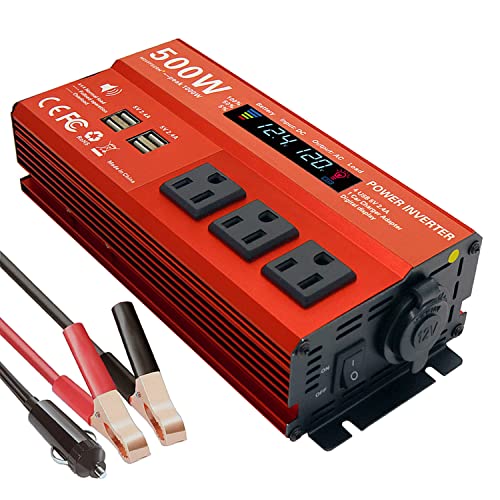
MOVFFGGRM 500W Peak 1000W Power Inverter for Vehicles

BESTEK Power Inverter DC 12-17V to AC 110V 300W Car Plug Adapter Outlet

vansoet 400W Car Power Inverter for Vehicles DC 12V to AC 110V Inverter

vansoet 400W Power Inverter DC 12V to AC 110V Car Adapter

PiSFAU 300W Car Power Inverter 12V to 110V Car Plug in Adapter Outlet

Pro Chaser 400W Power Inverters for Vehicles DC 12v to 110v AC Car Inverter
More Details On Our Top Picks
DrimMek keeps the layout straightforward, with one AC outlet, a USB-C port rated at 65W, and an LED display that gives you a quick read on what the unit is doing. That mix feels especially sensible for a commuter carrying a laptop and phone, because you do not need a crowded port bank to stay productive.
The honest read is that it suits practical, everyday charging more than device-heavy setups. Compared with the multi-port vansoet option below, this one is easier to live with when you want a simpler dash footprint and fewer cables to sort out.
Strong Points
- 65W USB-C helps many laptops top up without hunting for a wall adapter.
- The LED readout gives you a clear status check at a glance.
- Single-outlet design keeps cable clutter under control in a small cabin.
- 300W capacity leaves room for light office gear and personal electronics.
Areas To Watch
- One AC outlet can feel tight once you add a laptop charger and a second accessory.
- The simpler layout gives you less flexibility than the dual-outlet models in this list.
- Owners who carry several devices may outgrow it faster than a more port-rich unit.
Feature Snapshot
Who It Suits Best
Commuters and solo travelers who want a clean, uncomplicated charging setup will get the most from this one.
A Better Fit Elsewhere
PiSFAU 300W Car Power Inverter 12V to 110V Car Plug in Adapter Outlet suits you better when you want more USB ports for two devices at once.
This vansoet unit leans hard into flexibility, with two AC outlets, two USB-C outputs, and two USB-A ports built around a modest 200W class. For road trips or shared rides, that spread can keep a laptop, phones, and a tablet moving without constant cable swapping.
The trade-off is straightforward: you get many connection points, but not the higher total output you see in the 300W and 400W options. In a packed cabin, though, that balance can make more sense than raw wattage alone.
What We Like
- Two AC outlets give you more room for a charger and a second small device.
- USB-C in both 65W and 30W versions supports newer gear with different charging needs.
- Two QC 18W USB-A ports help older phones and accessories keep pace.
- The layout works well for family travel, where cords tend to multiply fast.
Small Caveats
- 200W leaves less headroom for power-hungry accessories than the 300W and 400W picks.
- So many ports can lead to a busier setup in a tight dashboard area.
- A compact body can still crowd neighboring plugs depending on your car console.
Technical Sheet
Who Will Love This
Families, carpoolers, and mixed-device travelers will appreciate the port count more than they would a simple one-outlet design.
Look Elsewhere When
BESTEK Power Inverter DC 12-17V to AC 110V 300W Car Plug Adapter Outlet is a better fit for you when a sturdier shell and higher total output matter more than sheer port variety.
The MOVFFGGRM model steps up the power ceiling, with 500W continuous output and 1000W peak output for short bursts. Peak output is the brief extra headroom a device can use during startup, which matters more for gear with a stronger initial draw than for a simple phone charger.
Four USB ports and one cigarette lighter port make it more versatile than the simpler DrimMek unit, and that extra spread can help on camping weekends or work trips with mixed gear. The honest caveat is size and load planning, because a more capable inverter still asks for more attention to what you plug in.
Upsides
- 500W continuous power opens the door to more demanding accessories.
- 1000W peak headroom helps cover brief startup draws.
- Four USB ports make it easier to keep several small devices going.
- The extra lighter-style outlet adds another path for compatible gear.
- Better suited to longer road days than a basic travel charger.
Points To Note
- The stronger output class usually means more thoughtful load management.
- More capability can also mean more cable sprawl in the car.
- Owners who only charge a laptop may not need this much headroom.
Core Details
Right Fit For
Drivers who carry a mix of laptop gear, handheld devices, and small accessories will get the most from the higher output headroom.
Where A Sibling Pick Shines
DrimMek 300W Car Power Inverter 12V to 110V Car Outlet Adapter is the cleaner match for you when your setup is lighter and you prefer fewer cords.
BESTEK brings a more polished feel, starting with its aluminum housing and a 300W output that sits in a comfortable middle zone for laptop use. The modified sine wave output is the kind of detail that matters because it shapes how the inverter delivers AC power, and that can be more relevant for electronics that expect a steady, familiar waveform.
Compared with the DrimMek pick, this one feels like the step up you make when you want a tougher enclosure and a stronger USB mix. In a road-trip setting, that combination is handy for a laptop in front and a phone in the back, though you still have to watch your total load.
Best Bits
- Aluminum housing gives it a sturdier, more composed feel in daily use.
- PD 65W USB-C supports modern laptops and faster device top-ups.
- 18W USB-A gives you a separate lane for older charging cables.
- 300W output works well for common travel electronics.
Honest Caveats
- Modified sine wave output may not suit every sensitive device equally well.
- One USB-A port keeps the mix practical but not especially broad.
- The metal shell can still collect scuffs with regular glove-box storage.
Details At A Glance
Built With In Mind
Frequent travelers who want a sturdier housing and a more confident-feeling charging setup will appreciate this model most.
Swap It Out When
Pro Chaser 400W Power Inverters for Vehicles DC 12v to 110v AC Car Inverter is the better match for you when higher output and dual AC outlets matter more than a metal shell.
This vansoet option goes broader than the 300W picks, with 400W output, two AC outlets, and a spread of USB-C, USB-A, and USB-C-style/USB-A/C labeling that points to mixed-device compatibility. For a family car or a work trip with multiple gadgets, that kind of flexibility can feel a lot less cramped than a single-outlet setup.
The trade-off is that more total capacity usually means you need to pay closer attention to how everything is plugged in and stored. Compared with the BESTEK model, it looks more focused on utility than enclosure refinement, which is fine for plenty of practical setups.
Bright Spots
- 400W output gives you a useful step up from the 300W units.
- Dual AC outlets help when two plug-in devices need power at once.
- Multiple USB paths suit mixed phone, tablet, and laptop charging.
- Feels well matched to road-trip packing where gear changes day to day.
Areas To Watch
- Dual outlet designs can tempt you to overpack the power load.
- The port-rich layout may crowd a compact center console.
- Storage is a little less tidy than the simpler single-outlet picks.
Feature Rundown
The Right Fit
Families, shared rides, and travelers carrying more than one charging cable will get the most out of this setup.
Another Choice May Suit
DrimMek 300W Car Power Inverter 12V to 110V Car Outlet Adapter is the cleaner fit for you when you only need one laptop and one phone at a time.
Where the previous vansoet model leans on broader USB variety, this one takes a more focused route with 400W output, two AC outlets, PD 30W USB-C, and QC 18W USB-A. That mix is handy for regular road use, especially when you want a laptop, a phone, and a second plug-in device without too much fuss.
The honest read is that it feels like a utilitarian road companion rather than a flashy upgrade. The trade-off is a less expansive port mix than the 200W multi-port model, but the layout remains easy to understand and easy to pack.
Reasons To Buy
- Two AC outlets keep the setup useful for mixed charging needs.
- PD 30W USB-C fits many phones and smaller laptops well.
- QC 18W USB-A adds a fast lane for compatible devices.
- 400W output gives you more room than a basic 200W inverter.
Room For Improvement
- USB-C power is solid, but not as high as the 65W choices above.
- Two outlets can still tempt a heavier load than the unit was meant to carry.
- The design is practical first, not especially polished.
Core Details
Who Should Grab It
You get the best match here when you need a sensible, straightforward inverter for routine road use and mixed charging.
Where A Sibling Pick Shines
Pro Chaser 400W Power Inverters for Vehicles DC 12v to 110v AC Car Inverter is the stronger fit for you when you want the same class of power with a 65W USB-C port and a more performance-first mix.
PiSFAU takes a travel-friendly approach with 300W output, two AC outlets, and four USB ports split between USB-C and USB-A. That makes it a natural fit for a couple on a road trip or a solo traveler carrying a laptop plus the usual phone-and-earbuds mix, because the port spread stays useful without feeling oversized.
Compared with the DrimMek 300W model, this one gives you more ways to charge at once, which matters in a car where every outlet seems claimed already. The downside is simple: more ports can invite more cable clutter, so your bag or console needs a little organization.
Highlights
- Two AC outlets and four USB ports give you real flexibility on the road.
- 24W USB-C and 24W USB-A charging handle common mobile gear neatly.
- 300W output is a comfortable middle point for travel work and errands.
- Good fit for travelers who share the cabin and the charger.
Softer Spots
- The wider port layout can turn into cable clutter fast.
- 24W USB-C is useful, though not as strong as the 65W options in this roundup.
- Two AC outlets are handy, but they still need careful load planning.
Spec Overview
Whose Shelf It Belongs On
Travelers who want a balanced mix of AC and USB ports without jumping to a heavier-duty inverter will feel at home here.
Skip It When
BESTEK Power Inverter DC 12-17V to AC 110V 300W Car Plug Adapter Outlet is the better fit for you when aluminum housing and a higher-end finish matter more than extra USB flexibility.
Pro Chaser sits at the sharper end of this list with 400W output, dual AC outlets, a USB-A QC 18W port, and a USB-C PD 65W port. That combination is well suited to a laptop-heavy setup, especially for someone who wants a stronger USB-C lane without giving up standard AC sockets.
Compared with the other 400W picks, this one feels aimed at people who want the most useful mix of laptop and accessory charging in a single unit. The only real caution is that higher capability can still tempt you to pile on more devices than your car setup comfortably wants.
Positives
- PD 65W USB-C is the strongest laptop-friendly USB-C spec in this roundup.
- Dual AC outlets make it easier to power more than one plug-in accessory.
- QC 18W USB-A adds another useful lane for compatible phones.
- 400W output gives it a solid ceiling for road work and travel gear.
Worth Noting
- The stronger setup can encourage a heavier load than many cars need.
- Two AC outlets and multiple ports still need sensible cable management.
- Some travelers may prefer the simpler shape of the 300W picks above.
Core Details
Built For In Mind
This is the right call for laptop-first travelers who want one inverter that can handle both computer charging and a second device.
A Better Fit Elsewhere
DrimMek 300W Car Power Inverter 12V to 110V Car Outlet Adapter is easier to live with when your setup stays small and you want fewer power branches to manage.
How To Choose The Right Car Inverters For Laptop
Match Output To Your Real Load
Start with the laptop charger, then add the phone, tablet, or hotspot you plan to power at the same time. A 300W inverter fits many everyday laptop setups, while 400W gives you more breathing room for a second device or a higher-draw accessory.
Peak wattage matters too, because startup surges can briefly exceed the regular draw. That extra margin matters most for equipment with a stronger kick at startup, not for a plain phone cable.
Choose The Port Mix You Will Actually Use
USB-C matters because many newer laptops and tablets charge through it, and higher-wattage USB-C often reduces the need for a bulky brick. USB-A still helps for older cables, dash gadgets, and backup charging, so a good inverter often balances both.
Two AC outlets sound generous, but they only help when the rest of your setup can use them cleanly. A packed family car benefits from more ports, while a solo commuter may be better served by a simpler layout.
Think About Vehicle Fit And Placement
Cabin space changes the real experience more than a spec sheet can show. A compact inverter can sit neatly near the center console, while a larger one may crowd cupholders or feel awkward in a small dash area.
Material matters as well. Aluminum housings often feel more durable in daily handling, while lighter plastic bodies may be easier to stash in a glove box or bag.
Buy For The Way You Travel
Daily commuters usually want something tidy, low-fuss, and quick to connect. Road-trippers and families tend to value extra outlets, more USB ports, and enough output to handle devices that stay plugged in for hours.
That is the cleanest way to narrow the list: match the inverter to the way you use the car, not to the longest feature list. A neat fit now saves you from replacing it later.
Things Worth Knowing First
Mistakes Worth Dodging
Many shoppers focus on the USB-C number and ignore the total wattage, which is where the real ceiling sits. That can leave you with a port that looks powerful but still feels cramped once a laptop and a second device are both connected.
Another common miss is ignoring shape and outlet placement. A model with plenty of ports can still become annoying in a tight cabin when plugs and cables compete for space.
What The Higher Tier Buys
More capable inverters usually give you higher continuous power, stronger USB-C output, and a sturdier shell. Those details cost more because they serve longer work sessions, heavier gear, and a more comfortable on-the-road setup.
The upgrade makes sense for laptop-heavy travel, family trips, or anyone who wants fewer compromises. For a simple phone-and-laptop routine, though, a midrange model often covers the need just fine.
Frequently Asked Questions
Can a car inverter charge a laptop safely?
Yes, a properly matched inverter can power many laptop chargers through AC or high-wattage USB-C. The key is staying within the inverter’s output range and the laptop charger’s own input needs.
Do you need 300W or 400W for a laptop?
Many laptop-only setups do well with 300W, especially with a capable USB-C port. A 400W model helps when you also run a phone, tablet, or another plug-in accessory.
What does peak wattage mean?
Peak wattage is the short burst of extra power an inverter can provide. It matters most for brief startup demands, not for steady charging over time.
How many ports should you look for?
One laptop and one phone can work with a simple layout, while family travel often benefits from multiple USB ports and at least two AC outlets. Your cabin layout and cable habits matter just as much as raw port count.
Does aluminum housing matter?
It can, especially for frequent travel and regular handling. Aluminum often feels more solid in day-to-day use, while simpler shells may be easier to store and carry.
Final Thoughts
The best car inverter for your laptop is the one that fits your travel rhythm, not the one with the longest feature list. A commuter can stay happy with a clean 300W setup, while a family or road-tripper may want the extra ports and headroom of a 400W model. Focus on the mix of AC outlets, USB-C strength, and overall wattage, and you’ll land on a unit that feels useful instead of cluttered. That’s the kind of choice that makes the car feel ready for work, not just for driving.
