

Pure sine wave inverters matter most when you want household-style AC power from a 12V or 24V battery bank without fussing over sensitive gear. That usually means RV travel, truck cabs, cabin backups, off-grid solar sheds, and camping setups where phones, laptops, kitchen appliances, and small motors all need steady output.
The eight picks below cover the range from compact 1500W units to larger 5000W and hybrid solar systems. You’ll see clear differences in outlet layout, remote control options, hardwire support, USB output, and battery compatibility, so you can match the inverter to the way you actually live and travel.
Quick Look At The Shortlist
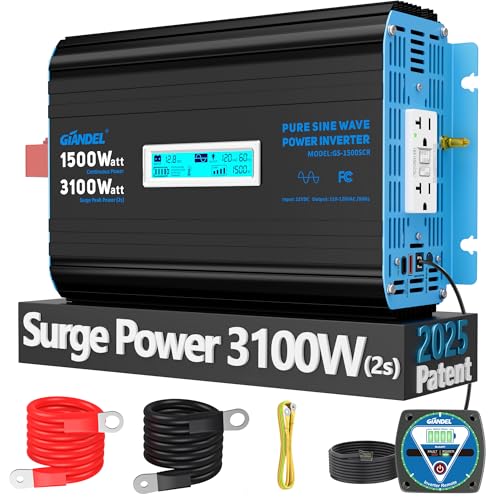
Giandel 1500 Watt Pure Sine Wave Power Inverter

BELTTT 2000W Pure Sine Wave Inverter
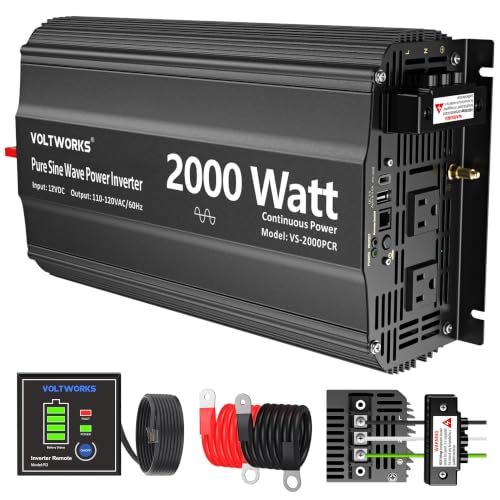
VOLTWORKS 2000 Watt Pure Sine Wave Inverter

VEVOR Pure Sine Wave Inverter 5000 Watt

ALLWEI 2000W Pure Sine Wave Inverter

BELTTT 3000W Pure Sine Wave Inverter

SUMRY Hybrid Solar Inverter 4000W

VOLTWORKS 3000 Watt Pure Sine Wave Power Inverter
More Details On Our Top Picks
Giandel’s 1500W unit sits in that useful middle zone where you want real household-style AC power without jumping to a huge chassis. The 12V DC to 120V AC conversion, 3100W surge rating, GFCI outlets, USB-C 36W port, and remote with battery monitor make it a tidy fit for campers, RV owners, and off-grid rigs.
The honest read is that this looks better for steady daily travel power than for oversized appliances. Compared with the larger VEVOR and VOLTWORKS units below, you get a more manageable output class, which usually means easier placement in tighter storage bays or van builds.
Strong Points
- GFCI outlets add a practical layer of outlet protection for travel setups with frequent plug changes.
- USB-C 36W support keeps phones, tablets, and compact electronics on one unit instead of adding another charger.
- The remote with battery monitor helps you keep an eye on power use from the cabin or tent area.
- 1500W continuous output suits many RV electronics, small kitchen items, and work gear without feeling oversized.
Things To Consider
- 1500W is comfortable for moderate loads, but larger appliances belong in a higher-output class.
- The more features packed into one unit, the more you’ll want a neat mounting plan and some cable organization.
- Remote and monitoring features help day-to-day use, yet they also add one more component to keep track of in a busy vehicle.
Feature Snapshot
Who It Suits Best
You get the most from this setup in an RV, camper van, or compact off-grid space where a balanced mix of outlets and charging options matters more than raw wattage.
A Better Fit Elsewhere
BELTTT’s 3000W Pure Sine Wave Inverter fits travelers who need more headroom for heavier gear and a stronger ceiling for startup loads.
This BELTTT model leans a little more toward all-around utility than the Giandel above. You get 2000W output, dual AC sockets, a 20A socket, a 5V 2.1A USB port, a hardwire port, and a remote controller, which makes it well suited to trucks, solar installs, and RVs that need a few different connection styles.
In most travel rigs, that mix is handy because you can run common appliances and still leave room for more permanent wiring. The trade-off is that the feature set asks for a bit more planning during setup, especially compared with simpler compact inverters.
What We Like
- Dual AC outlets and a 20A socket give you more plug options than a basic single-outlet layout.
- The hardwire port suits semi-permanent installs in vehicles and solar spaces where clean cable routing matters.
- 2000W output feels like a comfortable step up from 1500W for common household-style loads.
- The remote controller helps you place the inverter out of the way while still keeping it accessible.
Room For Improvement
- More connection choices also mean more attention to installation layout and cable management.
- The 5V 2.1A USB port is fine for basic charging, though it is not the star attraction here.
- Hardwire-ready gear usually works best with a bit of planning, so it suits hands-on setups more than quick plug-in use.
Core Details
Who Will Love This
You’re looking at a strong fit for truck builds, RV electrical bays, and solar owners who want several outlet styles in one device.
Reach For A Different Pick When
Giandel’s 1500 Watt Pure Sine Wave Power Inverter suits you better when you want a simpler, slightly smaller setup with USB-C charging built in.
VOLTWORKS keeps the formula straightforward, and that can be the right move for a home backup corner, RV cabinet, or truck install. The 12V DC to 110V or 120V AC conversion, UL fuses, 20A AC hardwire terminal, and lithium battery compatibility point to a unit built for practical wiring rather than flashy extras.
That makes it a strong match for people who care more about clean integration than having every port under the sun. Compared with BELTTT’s 2000W model, you lose some of the mixed outlet variety, but you gain a very direct, no-nonsense setup path.
Positives
- UL fuses add a reassuring layer of circuit protection at the design level.
- The 20A AC hardwire terminal makes fixed installation easier for a planned power bay.
- Lithium battery compatibility broadens its fit for modern off-grid and backup systems.
- 2000W output gives enough room for common appliances without pushing into heavy-duty territory.
Minor Gripes
- The simpler layout is tidy, but it leaves less room for built-in convenience features.
- Hardwire-oriented gear suits structured installs more than quick weekend swapping.
- With fewer visible extras, you’ll want to plan the surrounding system well so the whole setup feels polished.
Details At A Glance
Built With In Mind
You fit this model best when you want a serious but manageable inverter for a battery-backed system, especially in an RV, truck, or cabin.
Swap It Out When
BELTTT’s 2000W Pure Sine Wave Inverter is the more flexible route for you when dual AC outlets and a built-in USB port matter more than a hardwire-first design.
Once you move up to 5000W, the conversation changes from “basic backup” to “serious load handling.” VEVOR pairs that output with an LCD display, a USB port, and a remote controller, so it’s aimed at people running larger RV systems, travel rigs with power-hungry gear, or solar setups that need more breathing room.
That extra capacity is useful, but it also means the unit makes the most sense where you’ve already thought through battery size, cabling, and placement. Compared with the 2000W picks, this one is the obvious step for bigger loads, though it asks for a more deliberate install.
Highlights
- 5000W output gives you far more room for large appliances and layered power use.
- The LCD display makes it easier to keep an eye on system status from a glance.
- The remote controller helps place the main unit where it’s out of the way.
- USB support keeps small electronics covered alongside the larger AC side of the system.
- The black finish keeps the look understated, which suits RV panels and utility spaces.
Small Caveats
- High output is useful, but it’s only a good fit when the rest of the electrical setup can keep up.
- The larger class usually means more attention to cooling space, mounting location, and cable runs.
- For quick weekend use, the scale may feel like more machine than you actually need.
Quick Facts
Who Should Grab It
You’ll like this most in a large RV, van conversion, or solar-powered workspace where bigger loads are part of the routine.
Where A Sibling Pick Shines
ALLWEI’s 2000W Pure Sine Wave Inverter is the calmer choice for tighter builds where a smaller footprint matters more than raw output.
ALLWEI lands in the same 2000W neighborhood as the BELTTT and VOLTWORKS units, but its appeal is the mix of useful connections. You get 12V DC to 120V AC conversion, a 4000W surge rating, 20A sockets, a hardwire port, and a remote controller, which makes it a strong fit for vehicle power systems that need both flexibility and structure.
That combination suits people who like options without stepping all the way up to a large 5000W chassis. The trade-off is predictably familiar, since more connection paths usually mean a little more setup effort and more thought about where everything lives.
Best Bits
- 20A sockets give you a practical middle ground between small plugs and more fixed wiring.
- The hardwire port helps this fit into vehicle or solar builds that need a tidy install.
- The 4000W surge rating gives extra startup room beyond its 2000W continuous output.
- The remote controller is handy in a cargo area, garage, or RV bay where the inverter sits out of reach.
Areas To Watch
- A more feature-packed layout usually means more time spent on planning the install.
- The strongest appeal here is system flexibility, so very simple plug-and-play users may prefer a smaller model.
- Keeping the wiring neat matters, especially in a moving vehicle where loose cabling becomes annoying fast.
Feature Card
The Right Fit
You’re in the sweet spot for this model when your truck, RV, or solar setup needs connection variety and a remote, but not a giant power unit.
Another Choice May Suit
VOLTWORKS 2000 Watt Pure Sine Wave Inverter is the better match for a simpler hardwire-focused setup with UL fuses and a more restrained feature mix.
Some setups simply outgrow the 2000W class, and this BELTTT unit is built for that step up. The 3000W output, dual AC outlets, 20A socket, 5V 2.1A USB, hardwire port, remote controller, and 23ft cable point to a more capable system for solar cabins, RVs, trucks, and home backup spaces.
The longer remote cable is the kind of small detail that matters in real rooms and vehicles, because you can place the inverter where it belongs and still reach the controls comfortably. Compared with the 1500W Giandel and the smaller 2000W models, this one is the better answer for power-hungry gear, although it also asks for a sturdier battery bank and more thoughtful install work.
Positives
- 3000W output gives you more headroom for larger appliances and denser power use.
- The 23ft remote cable is genuinely useful in larger vans, garages, and cabins.
- Dual AC outlets and a 20A socket make it easier to connect a mix of devices.
- The hardwire port helps this fit into more permanent electrical plans.
- USB support keeps small electronics covered without stealing an AC outlet.
Points To Note
- The larger power class deserves a matching battery setup, so system balance matters.
- With more output on tap, mounting and cable planning become more important than with compact units.
- The extra capability is useful, but it also means this is not the lightest-touch choice for simple weekend use.
Spec Overview
Whose Shelf It Belongs On
You get the best fit here in an RV, truck, or off-grid room where bigger appliances are part of ordinary use, not a rare exception.
Skip It When
Giandel’s 1500 Watt Pure Sine Wave Power Inverter is the calmer choice for smaller travel setups that don’t need this much output.
SUMRY stands apart because it’s not just an inverter, it’s a hybrid solar inverter with a 140A MPPT charge controller. MPPT means maximum power point tracking, a charge-control method that helps the solar side work more efficiently as panel conditions shift, which makes this a strong fit for off-grid battery systems rather than simple vehicle plug-in use.
The glass top cover and LCD display give it a more finished, panel-friendly look, while the battery-less or AGM lithium support points to a system built for flexibility. Compared with the DC-to-AC-only picks above, this is for a more complete solar power plan, and that extra scope is exactly why it belongs here.
Bright Spots
- The hybrid design combines inverter and charging functions in one central unit.
- 140A MPPT support gives the solar side a more capable charge-management foundation.
- Battery-less or AGM lithium support broadens the kinds of off-grid systems it can serve.
- The LCD display makes status checks easier in a battery room or utility space.
- The glass top cover gives the unit a cleaner finished look than many plain metal boxes.
Worth Noting
- This is a more system-focused product, so it makes sense only in a planned solar setup.
- Hybrid gear usually asks for more careful wiring and a clearer understanding of your battery layout.
- For simple vehicle charging, it’s more machine than you need.
Core Details
Perfect Match For
You’re the right fit for this model when your off-grid setup uses a 24V battery bank and you want the inverter and solar charging side under one roof.
Look Elsewhere When
BELTTT’s 3000W Pure Sine Wave Inverter is the better choice for a simpler vehicle or cabin power job that doesn’t need hybrid solar control.
VOLTWORKS closes the list with a 3000W inverter that puts surge headroom front and center. The 6100W surge peak for 2 seconds, UL fuses, lithium battery compatibility, and support for inductive loads such as air conditioning, double-door refrigerators, water pumps, and heaters make it a strong candidate for tougher off-grid or vehicle power jobs.
That surge figure is the big story here, because startup loads can be much higher than everyday running loads. Compared with the BELTTT 3000W model, this one is aimed more at demanding appliances that need a firm push at startup, while still staying in the same general 12V to 120V framework.
Reasons To Buy
- 6100W surge capacity gives you more startup room for demanding equipment.
- The 2-second surge window suits loads that need a brief burst to get moving.
- UL fuses add an important layer of built-in protection for the power path.
- Lithium battery compatibility makes it a practical fit for modern battery banks.
- The unit is aimed at inductive loads, which matters for compressors, pumps, and similar gear.
Honest Caveats
- High surge capability is only useful when the rest of the system can support it.
- Power-hungry appliances usually mean larger cables, stronger batteries, and more thoughtful mounting.
- The stronger performance focus can make it feel like more inverter than smaller travel setups need.
At A Glance
The Right Fit
You get the most from this inverter in a truck, RV, or off-grid setup that has genuine startup loads, not just light charging duties.
Where Shoppers Go Wrong
ALLWEI’s 2000W Pure Sine Wave Inverter is the calmer choice for smaller systems that don’t need this level of surge headroom.
How To Choose The Right Pure Sine Wave Inverters
Match Output To The Loads You Actually Run
Start with the appliances you plan to power, not the biggest number on the listing. A 1500W inverter can serve phones, laptops, fans, and many travel appliances, while 3000W and 5000W units make more sense for microwaves, compressors, pumps, heaters, or layered use in an RV or cabin.
Surge rating matters too, because startup demand is often higher than running demand. That’s why models like the Giandel 1500W or VOLTWORKS 3000W deserve attention beyond the headline wattage.
Choose The Right Connection Style For Your Install
Dual AC outlets, 20A sockets, USB ports, and hardwire terminals each solve a different problem. A truck camper or van build often benefits from a remote controller and hardwire port, while a weekend travel setup may just need a couple of outlets and a USB-C charging option.
Longer remote cables, like the 23ft lead on the BELTTT 3000W model, help when the inverter sits in a compartment or rear storage space. The trade-off is more planning, since neat cable routing and safe mounting matter more as the system gets larger.
Think About Battery Type And System Size
Pure sine wave inverters work best when the battery bank matches the load class and voltage. The 24V SUMRY hybrid unit suits a different setup than the 12V models, and lithium compatibility becomes important when your energy storage plan has already moved past a basic starter build.
Smaller inverters are easier to place and simpler to live with, but larger units offer breathing room for appliances that need a stronger push. For most people, the best choice is the one that leaves some headroom without turning the whole installation into a project.
Look For Daily-Use Details, Not Just Output Numbers
Displays, remotes, GFCI outlets, and USB support sound small until you use the inverter every day. Those extras make a difference in an RV, on a long-haul drive, or in a cabin where you want quick status checks and fewer adapters.
The honest read is that convenience features are worth paying attention to only when they match your routine. A clean, well-placed 2000W inverter can feel more useful than a bigger unit with features you never touch.
A Quick Reality Check
Mistakes Worth Dodging
A common mistake is matching the inverter to one appliance and ignoring the rest of the system. You also want to avoid buying a larger unit than your battery bank, wiring, and installation space can comfortably support.
Another easy miss is overlooking whether you need hardwire support, USB output, or a remote at all. Those details can make daily use smoother, or they can just add clutter.
Where The Extra Money Goes
Higher-tier models usually cost more because they handle larger loads, offer stronger surge capacity, and include more connection flexibility. LCD screens, remotes, longer control cables, hardwire terminals, and hybrid solar charging all add convenience and system capability.
That upgrade makes sense when your setup runs larger appliances, lives in a vehicle full-time, or anchors an off-grid space. For lighter weekend use, a simpler inverter often gives you the cleaner answer.
Frequently Asked Questions
What Makes A Pure Sine Wave Inverter Different?
It produces AC power with a smooth waveform that matches the kind of electricity many household devices expect. That makes it a strong fit for electronics, chargers, and motors that prefer stable input.
How Much Wattage Do You Need?
Start with the total running load of the appliances you want to power, then leave room for startup demand. Small travel setups often work well around 1500W, while larger RV and off-grid systems usually need 2000W to 3000W or more.
Do You Need A Remote Controller?
A remote helps when the inverter sits in a compartment, cargo bay, or rear storage area. It’s less important for a simple open install where the unit is already easy to reach.
Why Does Surge Power Matter?
Some appliances need extra power for a brief moment at startup. Surge rating gives the inverter that short burst so motors and compressors can get moving more smoothly.
Is A Hybrid Solar Inverter Worth It?
That depends on whether your setup already includes solar panels and a battery bank. A hybrid model like the SUMRY makes more sense when you want charging and inversion in one system.
Final Thoughts
The right pure sine wave inverter depends on how you travel, camp, or build out your power space. For compact RV use, the Giandel and BELTTT 2000W picks keep things flexible; for larger loads, the VOLTWORKS 3000W and VEVOR 5000W step in with more muscle. SUMRY stands apart for full off-grid solar planning, while the VOLTWORKS 3000W focuses on surge-heavy appliances. Match the unit to your battery bank, your wiring, and the gear you actually run, and you’ll end up with a setup that feels calm instead of cramped.
