

You need a 3000-watt inverter when a vehicle, cabin, or backup setup has to do more than keep a phone charged. That usually means running several AC devices, keeping an RV livable, or giving a solar bank a useful household-style output without dragging in a generator for every small task.
The eight options below split into two camps, standard modified-sine style units and pure sine wave models. That difference matters for sensitive electronics, longer sessions, and the kind of gear you trust in a truck, RV, or off-grid setup.
The Shortlist At A Glance

TOPBULL 3000 Watt Power Inverter, Remote, LED Display
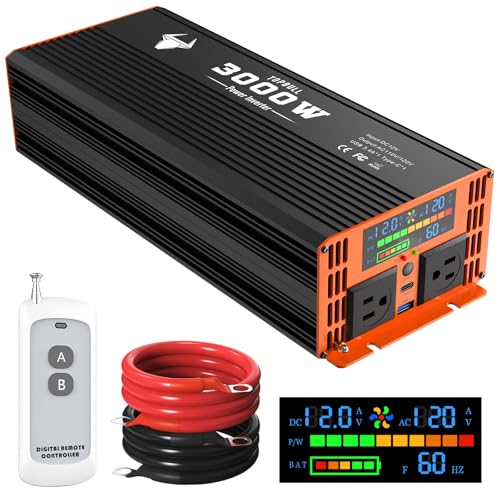
TOPBULL 3000 Watt Power Inverter 12V DC to 120V/110V AC, Surge 6000W

VOLTWORKS 3000 Watt Pure Sine Wave Inverter, UL Fuses

VEVOR 3000W Pure Sine Wave Inverter, 4 AC, USB, Type-C

Vansdon 3000W Pure Sine Wave Inverter, LCD, 3 AC, USB-C

BELTTT 3000W Pure Sine Wave Inverter, Hardwire Port

HONOURLIGHT 3000W Power Inverter, 6000W Peak, LCD
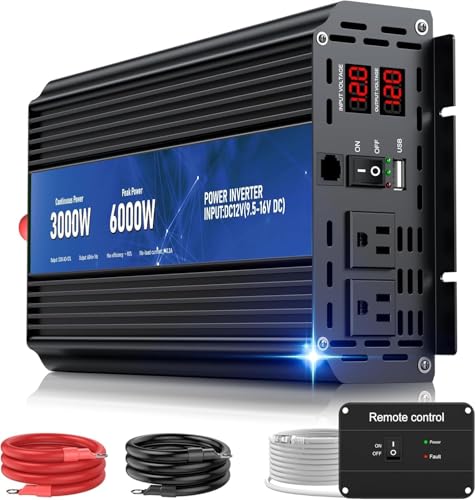
HONOURLIGHT 3000W Power Inverter, 6000W Peak, LCD
More Details On Our Top Picks
TOPBULL keeps the layout familiar, but the long remote lead gives it a more convenient feel for RV cabinets or a garage setup where the inverter itself sits out of reach. The LED display helps you watch the basics at a glance, which matters more than people expect during a long roadside or home backup session.
Dual AC outlets and a USB port give you a straightforward mix for small appliances and phone charging, and the included cables remove one extra step from installation. The trade-off is simple, this is a practical utility piece rather than the most refined-looking option in the group.
Highlights
- Remote access is handy when the unit lives in a hard-to-reach compartment.
- LED status readout makes day-to-day monitoring less awkward.
- Dual AC outlets suit a modest appliance pairing.
- USB charging adds convenience for travel gear and backup use.
- Cables in the box simplify a basic install.
Small Caveats
- That remote lead helps, but the remote itself still needs a sensible mounting spot.
- The feature set leans practical, not premium.
- Like many boxy inverters, it rewards tidy cable management.
Feature Card
Who It Suits Best
You get the most from this one in an RV, garage, or home backup setup where convenience matters more than a polished finish.
A Better Fit Elsewhere
VOLTWORKS B0B4RYZ666 suits you better when your gear leans sensitive and you want a pure sine wave output.
This TOPBULL listing feels broader in scope than the first one, especially for mixed use across a truck, solar bank, or cabin setup. The LCD display and remote control make it easier to keep tabs on the unit without standing right beside it, and the included cable is a nice practical touch.
The 6000W surge figure gives you extra headroom for brief startup loads, which can matter for devices that ask for a harder push at the beginning. The honest trade-off is that the page promises a lot of support and coverage language, while the hardware itself still comes down to how carefully you match the inverter to your equipment.
What We Like
- Works across vehicle, solar, and home-style setups.
- LCD readout keeps key status information visible.
- Remote control adds convenience in tight installations.
- Surge headroom helps with short startup spikes.
- Cable inclusion cuts down on extra sourcing.
Room For Improvement
- The support and coverage language is broader than the hardware details.
- Two AC outlets keep the layout simple, not expansive.
- Like most high-output inverters, it still asks for careful load matching.
Core Details
Made For
You suit this pick best when your setup crosses between travel power and off-grid support, especially in an RV or truck.
Another Choice May Suit
VEVOR B0D1KCMPNX is the better fit for you when more outlet variety matters than a simpler two-outlet layout.
VOLTWORKS moves into a cleaner power category, and that’s the main reason it stands apart from the two TOPBULL units above. Pure sine wave output means the AC signal is shaped more like standard household power, which can matter for laptops, audio gear, and other sensitive electronics in an RV or off-grid cabin.
The mention of UL fuses and AC hardwire support points to a more installation-minded design, and that suits permanent or semi-permanent setups. The trade-off is that this style makes more sense for careful installations than for casual plug-and-go use, so it’s a better match for a planned system than a weekend experiment.
Positives
- Pure sine wave output suits sensitive electronics better than simpler inverter types.
- UL fuses add a reassuring layer for system planning.
- Hardwire support fits a more permanent layout.
- Compatible with lithium battery setups, which helps certain solar builds.
- Works well for RV, truck, and off-grid use.
Areas To Watch
- Hardwire-oriented gear asks for a more thoughtful installation.
- The cleaner output comes with a more specific use case.
- Not the simplest pick for casual, temporary power needs.
Technical Sheet
Perfect Match For
You fit this inverter best when sensitive electronics and a more permanent setup matter more than portability.
Where A Sibling Pick Shines
HONOURLIGHT B0CSN3NV1F makes more sense for simpler backup duties where you want a familiar front panel and fewer installation concerns.
VEVOR leans hard into outlet variety, and that makes it easy to picture in a crowded RV, work truck, or mobile command-style setup. The combination of AC, USB, and Type-C ports means you can spread out charging without filling every slot with adapters, which is a real convenience in tight spaces.
The wireless remote reaches farther than most people need in a normal cabin, but that kind of range helps when the inverter lives in a storage bay or under a seat. The LCD screen stays on the body itself, so the trade-off is that you still need a direct glance for status updates.
Reasons To Buy
- Four AC outlets give it a roomy layout.
- USB and Type-C ports cover modern low-power gear.
- Wireless remote adds convenience from across a larger space.
- LCD display keeps basic information visible on the unit.
- Works well for multi-device charging in mobile setups.
Things To Consider
- The body screen still matters, so remote control is only part of the picture.
- So many outlets make cable organization more important.
- The feature set is broad, which may be more than a small setup needs.
Feature Rundown
Who Will Love This
You suit this pick best when you want one inverter to handle several devices in a truck, RV, or off-grid room.
Skip It When
BELTTT B0DCJL6P5Y makes more sense for you when hardwire support and a 23-foot cable matter more than extra outlet count.
Vansdon takes a very usable middle path, with three AC outlets and both USB-C and standard USB built into the body. That mix is handy in an RV or travel trailer because your phone, tablet, and a couple of mains devices can all stay connected without a pile of splitters.
The LCD display and remote control add the same kind of convenience you see in the better-rounded picks above, but the three-outlet layout is what makes this one feel easy to live with. The trade-off is that the feature set is broad rather than specialized, so it suits general use better than a narrowly tuned install.
Plus Points
- Three AC outlets offer a comfortable middle ground.
- USB-C support helps modern charging gear.
- Standard USB keeps older accessories covered.
- LCD display and remote control add day-to-day ease.
- Pure sine wave output broadens device compatibility.
Softer Spots
- The broad feature mix is less specialized than a hardwire-focused unit.
- Three outlets help, though very busy setups may still want more space.
- Clean cable routing matters once all ports are in use.
Details At A Glance
Whose Shelf It Belongs On
You fit this inverter best when you want a roomy, general-purpose unit for travel, off-grid living, or backup power.
Look Elsewhere When
VEVOR B0D1KCMPNX suits you better when four AC outlets and Type-C plus USB output matter more than a three-outlet middle ground.
BELTTT looks aimed at a more fixed installation than the portable-feeling units above, and the hardwire port makes that clear right away. The 23-foot remote cable helps in larger RVs, solar sheds, or utility spaces where the control point sits far from the inverter body.
Dual AC outlets, a 20A socket, and both USB and hardwire options give it a more installation-friendly profile than the Vansdon or HONOURLIGHT models. That flexibility is useful, though the honest read is that this unit fits best in a planned system rather than a casual weekend setup.
Bright Spots
- Hardwire port supports more serious installation plans.
- 23-foot remote cable reaches a long distance.
- Dual AC outlets keep the layout straightforward.
- 20A socket adds another connection path for the right setup.
- Pure sine wave output is a strong fit for mixed electronics.
Honest Caveats
- Hardwire-oriented design asks for a more deliberate install.
- The longer cable needs neat storage when not in use.
- Not as casual as a plug-in-first portable inverter.
Quick Facts
The Right Fit
You suit this inverter best when your power setup is more fixed, more planned, and built around clean cable runs.
Swap It Out When
HONOURLIGHT B0CSN3NV1F is the easier match for you when you want a simpler body layout for camping or basic backup use.
HONOURLIGHT keeps the formula straightforward, which helps more than you might expect in an emergency kit or camping setup. Dual AC outlets, an LCD display, and the remote control cover the basics without crowding the front panel, so the unit feels approachable rather than fussy.
The 6000W peak figure gives you a bit of startup breathing room, and the 3.4A USB port handles smaller devices alongside the mains sockets. It does not chase the richer port spread of VEVOR, but for straightforward backup use, that restraint can actually be easier to live with.
Standout Traits
- Simple layout is easy to understand at a glance.
- LCD display helps with routine checks.
- Remote control is useful from a seat or bunk.
- Dual AC outlets handle two mains devices.
- USB output supports smaller charging needs.
Worth Noting
- The port layout is simpler than the more feature-heavy picks.
- Three-point flexibility is limited compared with a multi-outlet unit.
- As with most inverters in this class, cable setup deserves attention.
At A Glance
Best Suited To
You suit this pick best when you want a straightforward inverter for travel backup, camping, or home emergency storage.
Reach For A Different Pick
VEVOR B0D1KCMPNX fits you better when a wider spread of AC and USB ports matters in the same space.
This HONOURLIGHT version mirrors the same core layout as the previous item, so the difference here is mostly listing identity and small positioning rather than a totally different tool. That makes it a steady, familiar option for someone who wants the same kind of straightforward emergency or camping power without chasing extra complexity.
Dual AC outlets, the LCD display, the remote, and the 3.4A USB port keep the use pattern clear and uncomplicated. It is the sort of inverter that fits neatly into a trunk kit or backup shelf, though VEVOR still gives you more port variety if your setup keeps growing.
Strong Points
- Simple, familiar layout for quick setup.
- LCD and remote improve day-to-day handling.
- Dual AC outlets are enough for modest loads.
- USB port adds a small-device charging path.
- Works well as a stored backup unit.
Areas To Watch
- It overlaps heavily with the previous HONOURLIGHT listing.
- Two AC outlets keep the design compact, not expansive.
- Users needing more ports may prefer VEVOR instead.
Core Details
Who Should Grab It
You suit this one best when you want a plain, easy-to-store inverter for camping, backup power, or a truck kit.
Where A Sibling Pick Shines
HONOURLIGHT B0CSN3NV1F is the cleaner fit for you when you want the same basic idea with a separate listing to compare.
How To Choose The Right Power Inverter 3000 Watts
Output Type Comes First
Start with the waveform, because that decides how the inverter behaves with different devices. Pure sine wave models like VOLTWORKS, VEVOR, Vansdon, and BELTTT deliver cleaner AC output, which suits laptops, audio gear, and many modern appliances better than simpler inverter designs.
Standard 12V to 110V or 120V units still make sense for general loads, camping gear, and basic backup tasks. The trade-off is compatibility, not raw usefulness, so the right choice depends on whether your setup leans toward sensitive electronics or everyday utility.
Match the Outlet Layout to Your Gear
Count what you plan to plug in, not just what looks good on the product page. Two AC outlets are enough for a compact kit, three outlets help in a busy travel trailer, and four AC outlets, like the VEVOR unit, are helpful in a setup that keeps growing.
USB, USB-C, and Type-C ports matter too, because they reduce the need for extra wall adapters. That sounds small, but in a truck cab or RV compartment, one less adapter often means less clutter and fewer loose parts to track.
Think About Installation Style
Some inverters are easier to move between vehicles, while others lean toward fixed or semi-fixed wiring. BELTTT’s hardwire port and longer remote cable suit planned installs, while TOPBULL and HONOURLIGHT feel simpler for plug-in use and quick setup.
Cable length, remote placement, and access to the body display all affect day-to-day convenience. A tidy install usually feels calmer in use, rather than like a tangle of cords hiding behind a seat.
Size the System for Real Use
Continuous wattage tells you the steady load the inverter can carry, while surge output covers the short startup burst some devices need. That difference matters for fridges, tools, or anything with a motor, even in a modest RV or emergency backup setup.
Also think about where the inverter lives. In a garage, cabin, or off-grid shed, you may value control access and mounting style more than sheer outlet count, while a road trip setup usually benefits from simple controls and easy monitoring.
Things Worth Knowing First
Common Shopping Slip Ups
One common miss is chasing wattage alone and forgetting waveform. A 3000W rating looks impressive, but the output style still shapes which devices feel comfortable on the inverter.
Another trap is underestimating cabling and placement. A roomy power unit can still feel awkward in a trunk or storage bay when the remote lead is short or the ports sit in a cramped corner.
When Paying More Pays Off
Higher-tier models usually cost more because they add cleaner output, harder-wearing installation options, and extra ports. That is exactly where BELTTT and VEVOR start to separate themselves from the simpler TOPBULL and HONOURLIGHT units.
The upgrade makes sense when your setup runs for long stretches, powers more than one device at a time, or needs to treat sensitive electronics more gently. For a basic backup shelf, plain utility may be enough.
Frequently Asked Questions
Can a 3000-watt inverter run household appliances?
It can handle many household-style devices, but the actual result depends on startup demand and the appliance’s power draw. You still need to match the inverter to the gear rather than the label alone.
What does pure sine wave mean?
Pure sine wave refers to a smoother AC output that resembles standard home power more closely. That usually suits sensitive electronics and mixed-use setups better.
Do you need hardwire support?
Hardwire support helps in fixed or semi-fixed installs, especially in RVs and off-grid systems. Portable setups often work fine without it.
Why does surge output matter?
Surge output covers the short startup spike that some devices need. It gives motors and other demanding gear a bit of breathing room.
Which port layout works best for travel?
USB plus AC outlets is the easiest all-around setup for travel use. USB-C or Type-C adds a nicer fit for newer devices and reduces adapter clutter.
Final Thoughts
The right Power Inverter 3000 Watts depends less on marketing language and more on how you actually use power day to day. For a simple RV or backup kit, the HONOURLIGHT and TOPBULL options stay straightforward. For cleaner output and more thoughtful installs, VOLTWORKS, VEVOR, and BELTTT make the stronger case. Choose the layout that matches your gear, your space, and how often you plan to move the unit.
