

Travel power gets complicated fast once you need more than a phone charger. You want steady AC outlets, sensible USB options, and a layout that fits your vehicle, RV, or backup setup without turning the cabin into a tangle of adapters.
This roundup focuses on inverter styles that fit that real use pattern, from compact car units to heavier-duty pure sine wave models for camping or off-grid power. You’ll also see where each one makes sense, because the right pick for a laptop on the highway is not the same as the right pick for a small solar setup.
Quick Shortlist For Road And Off-Grid Use

BESTEK 1000W Power Inverter for Vehicles DC 12V to AC 110V Inverter

2000W Pure Sine Wave Inverter, Inverter 12V DC to 120V AC for Solar, RV, Truck, Outdoor
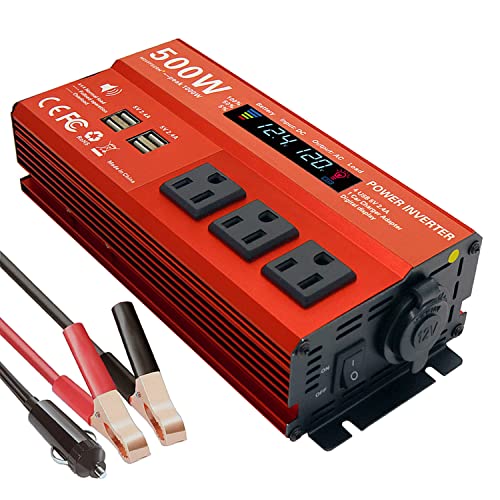
500W Peak 1000W Power Inverter for Vehicles, DC 12V to 110V AC

Power Inverter Pure Sine Wave 600Watt 12V DC to 120V AC with Remote Control

1000 Watt Power Inverter 12V DC to 110V/120V AC Car Inverter with LCD Screen Display

1000 Watt Pure Sine Wave Power Inverter ETL UL458 12V DC to 110V 120V AC

1000W Power Inverter 12V to 110V 120V AC Pure Sine Wave Inverter for RV Truck Camping

BESTEK 300W Pure Sine Wave Power Inverter – DC 12V to 110V AC Car Converter Plug Adapter Outlet
More Details On Our Top Picks
That mix of two AC outlets plus USB-C and USB-A makes this BESTEK unit feel built for a busy car, not a minimalist desk setup. For daily commuting or a family road trip, the layout gives you room for a laptop, a phone, and a second device without juggling adapters.
The 1000W continuous rating, with 2000W surge for start-up, gives you more headroom than the smaller 300W BESTEK pick later in this list. The trade-off is size and load planning, so it makes more sense for travelers who know their gear asks for more than a basic plug-in converter.
Bright Spots
- Two AC sockets make it easier to charge or run more than one item at a time.
- USB-C PD 30W is useful for modern phones and many smaller laptops in the car.
- USB-A QC 18W covers older cables and quick charging needs without extra hardware.
- 1000W continuous output suits heavier travel gear better than a low-watt unit.
- Vehicle, RV, truck, and home use gives it broad utility across common settings.
Points To Note
- Higher output usually means you need to be more careful about what you plug in.
- The larger format takes more cabin space than the compact 300W BESTEK option.
- Any inverter with multiple outlets asks for tidy cable management in a crowded car.
Feature Rundown
Who It Suits Best
Commuters, road trippers, and RV users who need a compact but capable multi-device inverter will get the most from this layout.
A Better Fit Elsewhere
BESTEK 300W Pure Sine Wave Power Inverter suits lighter phone-and-tablet charging better, especially for drivers who want a smaller footprint and fewer setup concerns.
This BELTTT model sits in a different lane from the car-first BESTEK units, because the 2000W class is aimed at bigger loads and more serious off-grid setups. The pure sine wave output matters here, since that smoother power shape is the safer match for gear that prefers cleaner AC.
You also get a hardwire port and remote controller, which fit RV bays, truck installs, and solar builds far better than a simple cigarette-lighter setup. The honest read is that it asks for more planning, but that planning pays off in flexibility.
Reasons To Buy
- 2000W output gives you room for larger appliances and heavier travel gear.
- Pure sine wave power suits electronics that prefer steadier current.
- Dual AC outlets and a 20A socket widen your connection options.
- Hardwire support fits fixed RV or solar installations neatly.
- Remote control makes it easier to manage the unit from a distance.
- Solar, RV, truck, and outdoor use make it a strong fit for mobile power systems.
Small Caveats
- It is more inverter than casual road-trip adapter, so it can feel oversized for light use.
- Hardwire installs take a more deliberate setup than plug-in car models.
- The larger power class makes cable and battery planning more important.
Core Details
Who Should Grab It
RV owners, truck users, and solar hobbyists with heavier AC needs are the best match for this power level.
Where A Sibling Pick Shines
VOLTWORKS 1000 Watt Pure Sine Wave Power Inverter fits better for smaller backup setups that still want clean output without jumping to the 2000W class.
This MOVFFGGRM unit is the sort of simple car inverter that works for daily drives, school runs, and light travel charging without asking much from the cabin. Four USB ports are the key difference versus the first BESTEK pick, so you can keep several small devices topped off at once.
It also includes a cigarette-lighter port, which makes it useful as a pass-through hub for older accessories. The trade-off is clear, though, since this is still a lighter-duty converter than the 1000W and 2000W models above.
Highlights
- Four USB ports make it handy for families with several small devices.
- The cigarette-lighter port adds another connection path for compatible gear.
- Plug-in vehicle use keeps the setup straightforward for everyday driving.
- Lower power expectations make it easier to match with basic charging needs.
Areas To Watch
- It is not the right pick for heavier AC appliances or higher-watt tools.
- Busy dashboards can feel cluttered once several cables are plugged in.
- Long cable runs and adapter chains tend to create more mess than a mounted unit.
Technical Sheet
Built With In Mind
Drivers who want a no-fuss charging hub for phones, tablets, and light travel gear will find this shape easy to live with.
Another Choice May Suit
BESTEK 1000W Power Inverter for Vehicles DC 12V to AC 110V Inverter suits you better once your road kit starts asking for AC outlets and more headroom.
Giandel takes a more measured path here, with 600W of pure sine wave output aimed at small solar systems, emergency backup, and outdoor use. Compared with the 2000W BELTTT unit, this one is easier to plan around and less likely to feel oversized in a modest setup.
The remote control is handy for a fixed installation where the inverter sits out of reach, and the dual AC outlets keep the design practical. The honest caveat is that you are buying a narrower power ceiling, so it suits compact needs rather than demanding appliances.
What We Like
- Pure sine wave output works well for gear that prefers steadier AC power.
- Dual AC outlets give you two places to plug in at once.
- Remote control makes mounted or tucked-away setups easier to manage.
- 600W output fits compact solar and backup use without excess bulk.
Room For Improvement
- It is a better fit for light-to-moderate loads than power-hungry devices.
- The smaller power envelope may leave less room for future expansion.
- Mounted use works best, so loose-carry portability is not its main strength.
At A Glance
Perfect Match For
Campers and small-system owners who want a cleaner-output inverter for modest power needs will appreciate the simple layout.
Swap It Out When
BELTTT 2000W Pure Sine Wave Inverter is the better fit once your setup needs more output, hardwire flexibility, and a remote for a larger system.
OLTEANP leans into monitoring, and that LCD screen gives you a clearer view of what the inverter is doing during a trip or a backup session. For laptop charging, vehicle travel, or a home emergency kit, that kind of status visibility helps you stay more deliberate about the load.
Compared with the first BESTEK 1000W model, this one trades the stronger port mix for a screen-focused setup, so your preference comes down to information versus charging variety. It suits people who want to glance at the display and keep a closer eye on the system.
Standout Traits
- LCD screen makes basic status checks easier during use.
- Two AC outlets provide room for a pair of corded devices.
- 36W Type-C charging is useful for newer laptops and tablets.
- 5V/3A USB support keeps smaller devices in the mix too.
- Works across truck, home, vehicle, and travel scenarios.
Softer Spots
- The display helps with monitoring, but it does not reduce load planning needs.
- Multiple ports mean cable organization still matters in a tight cabin.
- It is better suited to midrange use than heavy fixed installations.
Feature Snapshot
Who Will Love This
Travelers who like a visible readout and a midrange power level will get the most satisfaction from this setup.
Not Your Match When
MOVFFGGRM 500W Peak 1000W Power Inverter suits you better for a simpler, lower-cost-style vehicle charging layout with more USB ports and less emphasis on monitoring.
VOLTWORKS lands in the clean-power middle ground, and that pure sine wave output is a good reason to look at it for home backup, RV use, or off-grid solar. It also supports lithium battery setups, which matters for people building a more modern portable power system.
That LCD display keeps the experience practical, especially when the unit sits in a van, a garage, or a small power cabinet. Compared with the Giandel 600W model, this one gives you more ceiling for mixed gear without abandoning the cleaner output style.
Positives
- Pure sine wave output is a strong match for sensitive electronics and mixed gear.
- 1000W capacity gives you a step up from the smaller 600W class.
- Lithium battery compatibility broadens its fit for modern portable power builds.
- LCD display helps you monitor the unit without guesswork.
- Home, RV, truck, and solar compatibility makes it versatile across common setups.
Things To Consider
- It is still a fixed-power device, so load planning matters in bigger builds.
- The feature set is strong, but it may feel more serious than a casual car inverter.
- Display-led monitoring is useful, though it does not replace careful wiring and placement.
Details At A Glance
Best Suited To
Home backup planners, RV users, and off-grid setups that want cleaner output with more headroom will find this a sensible fit.
Look Elsewhere When
Giandel Power Inverter Pure Sine Wave 600Watt suits lighter emergency or solar needs better when a smaller footprint matters more than extra wattage.
OYPSX aims squarely at travel rigs, and the mix of pure sine wave output, LCD display, wired controller, AC outlets, and USB ports gives it a very complete feel. For RV weekends or camping setups, that combination makes the power station easier to live with than a bare-bones plug-in converter.
It stands apart from the VOLTWORKS unit by leaning harder into user control and accessories, while staying in the same 1000W class. The trade-off is that this kind of fuller feature set can feel like more inverter than you need for plain phone charging.
Best Bits
- Pure sine wave output supports a broader range of travel electronics.
- LCD display and wired controller improve convenience in mounted installs.
- AC outlets plus USB ports give you several connection paths at once.
- RV, truck, camping, and off-grid framing makes the use case very clear.
- 1000W capacity offers room for more than basic charging tasks.
Minor Gripes
- The richer feature set may be more than a light-duty car setup needs.
- Wired control works best once you have already decided on an install location.
- More ports usually mean more cables to keep organized in tight spaces.
Core Details
Whose Shelf It Belongs On
RV owners and campers who want a feature-rich inverter with a clean-output profile will feel right at home with this setup.
Reach For A Different Pick When
BESTEK 1000W Power Inverter for Vehicles DC 12V to AC 110V Inverter is the easier choice for drivers who want a simpler, car-friendly port mix.
This BESTEK model is the lightest-duty option in the set, and that makes it a tidy fit for phones, tablets, and laptop charging in a car. The pure sine wave output gives it a cleaner power profile than many basic car adapters, which is useful for sensitive electronics on daily drives.
Compared with the larger BESTEK 1000W version near the top, you give up total output and extra outlets, but you gain a smaller, easier-to-place unit. That trade-off works well for drivers who want just enough AC capacity without turning the center console into a power station.
Strong Points
- Compact format fits neatly in smaller cabins and travel bags.
- Pure sine wave output is a smart match for delicate electronics.
- PD 30W USB-C helps with newer charging cables and devices.
- QC 18W USB-A covers quick charging for older accessories.
- Car-focused design keeps the setup simple for routine driving.
Worth Noting
- 300W is best for light gear, not higher-demand appliances.
- You trade away the broader outlet mix found on the 1000W BESTEK model.
- Small size is handy, though it also limits how much you can power at once.
Quick Facts
Made For
Daily drivers, commuters, and travelers with lighter electronics will appreciate the small footprint and simple port mix.
Consider Something Else When
OLTEANP 1000 Watt Power Inverter suits you better once you want an LCD display and more room for AC-powered travel gear.
How To Choose The Right 700 Watt Inverters
Match Output To Real Gear
Start with the devices you actually carry, not the label on the box. A 300W or 500W travel unit can handle phone chargers, tablets, and some laptop use, while 600W to 1000W gives you more room for accessories and light appliances.
Pure sine wave means the inverter aims to provide smoother AC power, which is useful for sensitive electronics and many modern chargers. Modified output can work for simpler gear, but cleaner power usually feels safer for mixed-use setups and home backup plans.
Choose The Right Connection Style
Car plug units stay easy for commuting and road trips, especially when you want a quick setup with no install work. Hardwire units suit RVs, solar cabinets, and trucks that already have a fixed power layout.
USB-C, USB-A, AC outlets, and cigarette-lighter ports each solve a different problem. The best match is the one that reduces adapters in your exact use case, because fewer dangling cords usually means a calmer setup.
Think About Placement And Control
Larger inverters need space, airflow, and sensible cable routing, so a bench seat or cargo-area install works better than a crowded cup-holder corner. Display screens help you keep an eye on load, while remote controllers make mounted units less awkward to live with.
For camping or RV use, the question is not only wattage, it is also where the unit sits and how easy it is to reach. A tidy install tends to stay easier to use, and that matters more than a flashy feature list.
Pick For Your Use Pattern
Daily drivers usually need a compact unit with a few charging ports. RV owners and off-grid setups often benefit from clean output, more headroom, and a control layout that suits a fixed install.
That split is why the list includes both small plug-in converters and fuller power inverters. The right one is the one that fits your vehicle, your battery setup, and the gear you already own.
Things Worth Knowing First
Mistakes Worth Dodging
One common slip-up is buying too little headroom for the gear you own. A travel fridge, laptop, and camera charger ask for a very different setup than a single phone cable, so the wattage should match the real mix.
Another issue is ignoring port type. You can save yourself a lot of frustration by matching USB-C, USB-A, and AC outlets to the cords already in your bag.
The Upgrade Payoff
Higher-tier inverters cost more because they usually bring cleaner power, stronger surge handling, and better install flexibility. That extra room helps in RVs, solar systems, and backup setups where equipment variety matters.
You also pay for convenience features like remote controls, LCD screens, and broader outlet layouts. Those extras matter most when the inverter becomes part of a regular routine instead of an occasional emergency tool.
Frequently Asked Questions
What does pure sine wave mean?
Pure sine wave describes a smoother AC output that more closely matches household power. You usually notice the benefit most with sensitive electronics and mixed-device setups.
Can a 700 watt class inverter run a laptop?
Yes, many laptops fit comfortably in this general power range, especially with the right port selection. The exact fit depends on the laptop charger and the inverter’s continuous rating.
Do you need hardwire ports for RV use?
Hardwire ports are useful for fixed RV and solar installs because they create a steadier setup. Plug-in vehicle units still work well for simpler trips and lighter loads.
Why do some inverters include both USB and AC outlets?
That mix lets you charge small electronics and run corded gear from the same unit. It cuts down on adapters and keeps travel bags a little tidier.
What matters more, continuous wattage or surge wattage?
Continuous wattage matters for normal use because it shows what the inverter can sustain. Surge wattage helps with brief start-up spikes, which some devices need at the moment they turn on.
Closing Thoughts
You get the best result here by matching the inverter to your day-to-day routine, not by chasing the biggest number on the page. A compact BESTEK or MOVFFGGRM unit works well for commuting and travel charging, while the BELTTT and VOLTWORKS models make more sense once your setup turns into RV, solar, or home backup duty. The right choice should feel like a clean fit in your vehicle and in your bag of cables, not another thing to manage. Pick the one that fits the way you already travel, and it stays useful.
