

A 6000 watt inverter setup usually comes into play when you want household-style AC power from a 12V system and you need enough headroom for startup surges, not just steady draw. That matters in an RV, a truck, a cabin, or a backup rig where a coffee maker, small tool, or charging station can trip weaker gear fast. The picks below focus on capacity, outlet mix, display clarity, and remote control convenience, so you can match the inverter to real daily use rather than a spec sheet.
Quick Look At The Shortlist
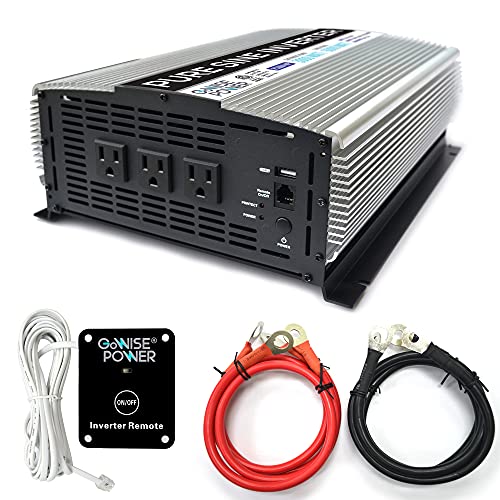
GoWISE Power PS1004 Pure Sine Wave Inverter

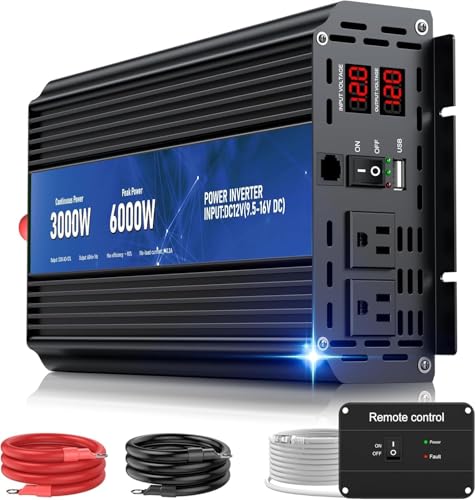
HONOURLIGHT 3000W Power Inverter

HONOURLIGHT 3000W Power Inverter

Sunivora 3000 Watt Power Inverter


ROARBATT 4000W Pure Sine Wave Power Inverter
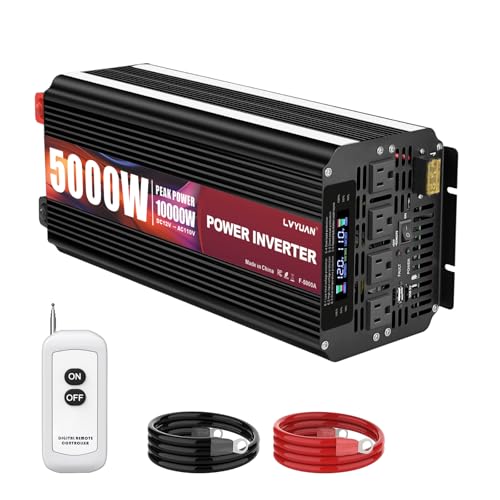
LVYUAN 5000 Watt Power Inverter
More Details On Our Top Picks
GoWISE Power’s PS1004 stands out for the way it aims at steady use rather than flashy extras. The pure sine wave output matters because many electronics prefer a cleaner AC signal, especially in an RV or backup setup where you’re running chargers, small appliances, or sensitive gear.
The included starter cables also make the install story less awkward than a bare-bones unit, though you still need to plan for proper mounting and cable routing. For a truck, camper, or garage setup, that practical angle can matter more than a long feature list.
Strong Points
- Pure sine wave output suits gear that prefers a smoother power shape.
- Starter cables make the first hookup easier for a prepared install.
- Four output sockets help you spread out multiple devices.
- The 3000W continuous rating gives you a real working ceiling for everyday loads.
Things To Consider
- Grey, utilitarian styling keeps the focus on function, not cabinet appeal.
- You still need enough battery capacity and cabling for the load you plan to run.
- Owners commonly end up checking heat and cable placement more often on higher-draw setups.
Feature Snapshot
Who It Suits Best
You’re a good fit for this model if you want a practical inverter for an RV, truck, or home backup station and value clean output over bells and whistles.
Where A Sibling Pick Shines
BELTTT’s 3000W Pure Sine Wave Inverter suits you better when you want a broader connection mix, including a hardwire port and a remote with a long cable.
Compared with the GoWISE unit, this BELTTT inverter leans harder into connection flexibility. You get dual AC outlets, a 20A socket, a USB port rated at 5V 2.1A, a hardwire port, and a remote controller with a 23-foot cable, which is useful in an RV wall cabinet or a solar room where the inverter itself sits out of the way.
The honest read is that this kind of layout suits organized installs more than casual plug-and-play use. You may find the extra options especially helpful in solar or off-grid builds where one machine needs to handle several device types without constant swapping.
Highlights
- Dual AC outlets help you run two household-style loads.
- The 20A socket adds a useful dedicated connection point.
- USB and hardwire options make this a flexible installation choice.
- The 23-foot remote cable gives you easier placement control in larger layouts.
Small Caveats
- The wider feature set makes setup more involved than a simple two-outlet inverter.
- Long cable runs need tidy routing so the install stays manageable.
- For a compact travel rig, some of the flexibility may be more than you need.
Core Details
Made For
You’re the best match for this pick if your RV, solar shed, or off-grid setup needs more connection types and you don’t mind a more involved install.
Another Choice May Suit
GoWISE Power’s PS1004 is the cleaner fit for simpler setups where starter cables and a straightforward socket layout matter more than extra ports.
This HONOURLIGHT model feels built for straightforward daily use in an RV, truck, or camping rig. The LCD display and remote control give you a better handle on what the inverter is doing, which helps when the unit sits in a cargo area or under a bench rather than right beside you.
Compared with the BELTTT pick, it keeps the port layout simpler, so the appeal is clarity rather than a long list of connection types. That makes it a sensible middle-ground choice for someone who wants the display and remote without a lot of extra wiring decisions.
Bright Spots
- LCD readout makes it easier to check status at a glance.
- Remote control supports more convenient placement in a vehicle or cabin.
- Dual AC outlets cover common charging and appliance needs.
- The 3000W continuous rating leaves room for regular household-style use.
- The 3.4A USB port helps keep smaller devices charged without an adapter.
Areas To Watch
- The simpler outlet mix may feel lean if you need several plug styles in one place.
- LCDs are handy, though they also invite a bit more attention to placement and glare.
Quick Facts
Best Suited To
You’re in the right lane with this one if you want a visible, easy-to-read inverter for travel power, emergency backup, or a weekend camp setup.
Look Elsewhere When
BELTTT’s 3000W Pure Sine Wave Inverter fits better for a more layered install, especially where the hardwire port and longer remote lead matter.
This second HONOURLIGHT entry tracks closely with the previous model, so the choice comes down to listing details and how you want to source it. The same LCD plus remote combo makes sense for a mounted install where visibility matters, and the dual AC outlets keep it practical for normal gear in a truck or RV.
The trade-off is that, like the earlier HONOURLIGHT pick, it stays focused on the essentials rather than layering on extra ports. That can be a strength for a cleaner layout, though it leaves less room for mixed charging needs than a port-heavy model like Sunivora’s.
Upsides
- LCD display supports fast status checks in daily use.
- Remote control makes it easier to operate from a seated position.
- Dual AC outlets suit common appliance and charging jobs.
- The 6000W peak rating gives short burst headroom for startup loads.
Room For Improvement
- The feature set is streamlined, so it may not satisfy users who want many connection options.
- Mounting and cable planning still matter, especially in a crowded vehicle compartment.
- Without extra outlets, multi-device households may need a second charging point nearby.
Details At A Glance
Right Fit For
You’re in a good spot with this unit if you want a vehicle-friendly inverter with a remote and display, and you prefer a no-fuss connection layout.
Skip It When
Sunivora’s 3000 Watt Power Inverter is the better call for multi-device charging because it adds four USB ports and four AC outlets.
Sunivora leans into connection density, which makes sense for a vehicle or camp setup with several devices at once. Four AC outlets and four USB ports give you more breathing room than the simpler HONOURLIGHT models, and the LCD with remote keeps control points from feeling buried.
That extra capacity around ports is the real story here, not a dramatic redesign. For family travel or a work truck with phones, tablets, and small tools in rotation, it can feel a lot less cramped than a two-outlet inverter.
Best Bits
- Four AC outlets help spread out multiple loads.
- Four USB ports support a busy charging routine.
- LCD and remote control improve day-to-day convenience.
- EPS support adds a useful backup-power angle for certain setups.
Softer Spots
- The larger port count can invite cable clutter unless you plan the layout carefully.
- More connection points mean you’ll want to keep labels and cord management tidy.
Feature Rundown
Whose Shelf It Belongs On
You’re the right match for this one if your truck, RV, or camping setup juggles a lot of charging cords and you want fewer adapters in the mix.
Where Shoppers Go Wrong
Cantonape’s 3000W Power Inverter suits you better when four AC outlets matter more than USB density and you want a simpler port mix overall.
Cantonape’s appeal starts with balance: four AC outlets, four USB ports, an LCD display, and a remote controller all land in one package. That kind of spread suits a truck, boat, or RV where you want flexibility without jumping straight to a heavier 4000W or 5000W unit.
The honest read is that this model looks especially sensible for people who want a broad, practical layout rather than a showpiece. It sits nicely between the simpler HONOURLIGHT units and the larger ROARBATT and LVYUAN picks.
Reasons To Buy
- Four AC outlets give you plenty of plug-in space.
- Four USB ports help keep small devices organized.
- LCD display and remote controller improve everyday handling.
- The form factor fits well in vehicle-based installations.
Worth Noting
- The mixed port layout is useful, though it still needs sensible cord management.
- It stays in the 3000W class, so heavier gear may call for a larger inverter.
Core Details
The Right Fit
You’re likely to appreciate this pick most in a van, RV, or boat setup where several devices need charging and you want the layout to stay tidy.
A Better Fit Elsewhere
ROARBATT’s 4000W Pure Sine Wave Power Inverter makes more sense for heavier electrical demand and a larger step up in continuous output.
ROARBATT moves into a more serious power class with 4000W continuous output and 8000W peak capacity. That step up matters in real use because heavier loads and tougher startup draws tend to feel less cramped, especially in an RV, truck, or off-grid cabin where several devices may run together.
Compared with the 3000W units above, this one gives you more breathing room before you reach the edge of the inverter’s comfort zone. You still need a well-planned battery bank and proper wiring, but the extra margin is exactly why this sort of model earns attention for demanding setups.
Standout Traits
- 4000W continuous output raises the bar for ongoing demand.
- 8000W peak output adds a lot of startup headroom.
- Four AC outlets support multiple plug-in devices.
- Dual USB ports keep smaller electronics within easy reach.
- LED display and remote control help with monitoring and placement.
Points To Note
- This level of output asks for careful battery and cable planning.
- It makes more sense in larger vehicle or off-grid builds than in compact weekend rigs.
Spec Overview
Built With In Mind
You’re a strong match for this inverter if your setup regularly handles multiple devices, heavier tools, or a more demanding off-grid routine.
Where Shoppers Go Wrong
LVYUAN’s 5000 Watt Power Inverter is the better fit when you want to step up again for an even larger reserve of continuous output.
LVYUAN is the most capacity-forward pick in this roundup, and that makes the target use case pretty clear. A 5000W inverter belongs in setups where you expect substantial continuous demand, not just a few chargers and a light appliance now and then.
The wireless remote control is a nice touch for larger installs because the control point can sit where it’s easiest to reach. Compared with ROARBATT’s 4000W model, this one gives you another step up in reserve, which is exactly where a lot of serious vehicle and off-grid systems start to feel more comfortable.
Positives
- 5000W continuous output gives you a stronger upper-end capacity.
- Four AC outlets support a broad device mix.
- Wireless remote control suits larger vehicle or cabin installs.
- LCD display helps keep the unit easy to monitor.
- The design fits heavy-duty, off-grid, and RV-style use cases.
Areas To Watch
- The larger capacity makes battery bank planning more important.
- It is better suited to committed installs than casual carry-around use.
- More output headroom usually means more attention to heat, wiring, and placement.
Technical Sheet
Who Should Grab It
You’re in the right place with this inverter if your RV, truck, solar bank, or cabin setup needs strong output and a control layout that feels easy to live with.
Hidden Buying Traps
ROARBATT’s 4000W Pure Sine Wave Power Inverter is the more measured choice when your power needs are serious but not yet at the 5000W level.
How To Choose The Right 6000 Watt Inverters
Continuous Output Versus Peak Output
Continuous output tells you what the inverter can support steadily, while peak output is the short burst it can handle during startup. That split matters because a compressor, power tool, or appliance motor often draws more at the moment it starts than it does once it settles.
For a van or RV, steady output usually matters more than the burst figure on the box. A model with generous peak capacity but thin continuous output can still feel cramped in daily use.
Wave Shape And Device Compatibility
Pure sine wave inverters create an output that’s closer to household power, which is why they tend to be a safer fit for sensitive electronics, chargers, and many modern appliances. Modified or simpler output types can work for some loads, but the trade-off is a rougher electrical shape.
That difference becomes obvious in mixed-use setups, especially in cabins and mobile work rigs where you may power a laptop one moment and a small appliance the next. A pure sine wave unit usually gives you fewer surprises.
Ports, Remote Control, And Layout
Outlet count matters less than it first appears, because the real question is what you plan to power at the same time. Four AC outlets help in a family vehicle or shared workspace, while USB ports reduce the need for extra adapters.
Remote control and display placement also matter more than many people expect. A remote is handy when the inverter sits in a cargo bay, under a bench, or near the battery bank, while an LCD screen helps you keep an eye on usage without guessing.
Fit The Inverter To The Build
A 3000W class inverter suits lighter cabin and travel use, while a 4000W or 5000W unit makes more sense for heavier loads and more demanding off-grid systems. The bigger units ask for better cabling, more planning, and a battery bank that can support the load without strain.
The right match feels almost boring in use, and that’s the point. You want enough headroom that the inverter isn’t constantly feeling stretched.
A Quick Reality Check Before You Choose
Common Shopping Slip Ups
A lot of people focus on peak output and skip the continuous rating, then wonder why the system feels limited. Another common miss is overlooking outlet type, because a well-placed AC socket or USB port can matter more than a long feature list.
Cable planning gets ignored too, especially in vehicles where the inverter sits far from the driver or living area. A tidy install with the right run length usually feels better than a powerful unit installed badly.
What The Higher Tier Buys
Higher-tier units usually pay for extra continuous output, more physical ports, clearer displays, and more convenient remotes. You’re also more likely to get a layout that suits larger installations, which is helpful in RVs, boats, and off-grid cabins.
That upgrade makes sense when your devices include more than phones and lights. Once you start running heavier gear or several appliances together, the extra reserve can make the whole setup calmer to live with.
Frequently Asked Questions
What does 6000W peak mean on an inverter?
Peak output is the short burst the inverter can supply during startup. It does not mean you can run everything at that level all the time.
Is pure sine wave worth it?
Pure sine wave output is usually the cleaner fit for sensitive electronics and mixed home-style loads. That said, it often makes more sense for setups with laptops, appliances, or modern charging gear.
Can you use a 6000 watt inverter in a car?
The inverter itself can sit in a vehicle-based system, but the battery and wiring need to match the load. A standard starter battery often falls short for extended high-demand use.
How many devices can you run at once?
That depends on the combined wattage and the outlet layout. Four AC outlets help with convenience, but the total load still has to stay within the inverter’s capacity.
What size system suits a 5000W inverter?
A 5000W inverter fits serious off-grid, RV, or truck builds with a strong battery bank and proper cabling. It’s overkill for light charging setups, but useful when you need a large reserve.
Final Thoughts
A good inverter choice starts with your real load, not the biggest number on the page. For everyday RV and truck use, the 3000W models give you plenty of room without turning the install into a project, while the 4000W and 5000W picks make sense for heavier off-grid needs. Pure sine wave output, remote control access, and a sensible port layout can make daily use feel much smoother. Choose the size that leaves you room to breathe, and the rest gets easier.
