A solar generator is like a sieve under a bright sky: light pours in, but only part becomes useful power. You lose energy at the panel from reflection, heat, shading, dirt, and angle errors, then again in wiring, charge control, battery storage, and inversion. Even a 23% rated panel rarely delivers that in practice, and the biggest losses often hide where you least expect them.
What Causes Solar Generator Energy Loss?
Solar generator energy loss happens because only a fraction of incoming sunlight is converted into electricity, with the rest lost as heat, reflected light, or electrical inefficiencies inside the panel.
You’re seeing the effect of material absorption limits, which cap how much photon energy silicon can capture, and recombination mechanisms, which let charge carriers cancel before they reach the circuit. Inside the cell, defects, imperfect crystal ordering, and resistive pathways reduce current and voltage.
You also lose energy whenever the semiconductor can’t match the full solar range, so some light passes through unused. In your system, this means efficiency is always bounded through physics, manufacturing precision, and cell design.
Comprehension of these losses helps you evaluate panels realistically and choose equipment that fits your performance goals.
How Solar Panels Lose Power in Real Sunlight
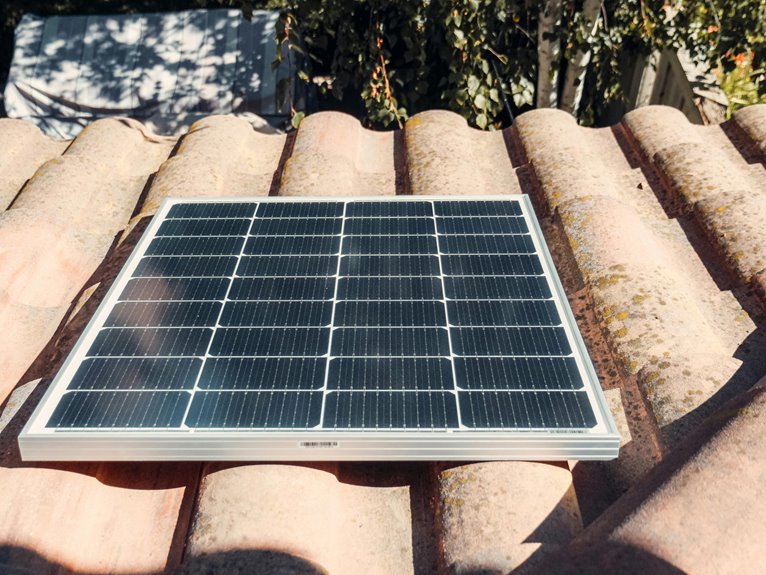
You’ll see real sunlight lower output when heat raises cell temperature, reducing voltage and shifting the module away from its rated efficiency. You’ll also lose power when the sun hits the panel at an angle or whenever nearby shading blocks part of the array, because both reduce effective irradiance.
Dirt, dust, and surface soiling further attenuate incoming light, so you get less current even though the panel hardware is unchanged.
Heat-Induced Efficiency Drop
When solar panels heat up in real sunlight, their conversion efficiency drops because higher cell temperatures reduce voltage faster than current can compensate. You’ll see thermal derating effects as module temperature rises above standard test conditions, shifting the IV curve and lowering peak power.
In practical operation, every extra degree can trim output, so your array won’t match its lab rating on hot afternoons. You can reduce this loss with panel cooling methods such as rear ventilation, raised mounting, and heat-tolerant module selection.
These measures help you keep voltage stable and preserve usable energy. If you understand this temperature penalty, you’re better equipped to size systems realistically and stay confident in performance estimates.
Angle And Shade Loss
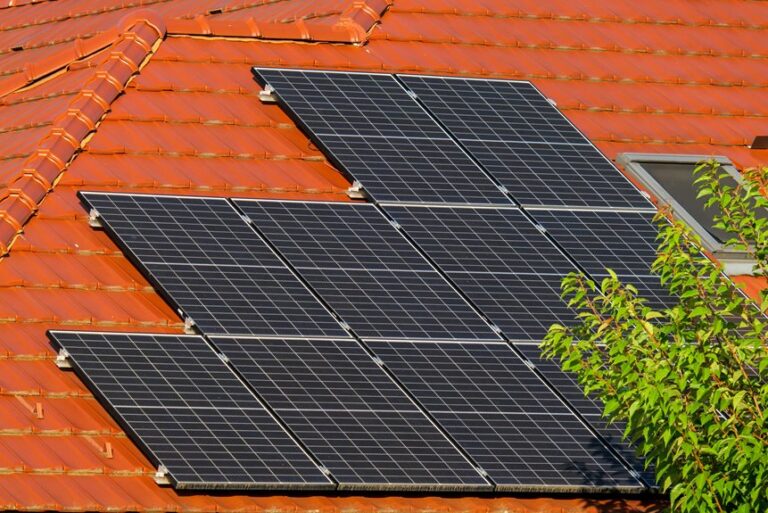
Even under clear skies, panel orientation and partial shading can cut output sharply because incident light rarely strikes every cell at the ideal angle. You’ll see this as cosine loss: upon the sun’s ray hits obliquely, irradiance on the module falls, so current drops. In your array, even a small shadow can disturb string current and trigger bypass diodes, reducing usable power.
- Track seasonal sun paths to keep incidence angles closer to normal.
- Compare tilt adjustment methods to balance winter gain against summer loss.
- Minimize shade from chimneys, branches, and vents via spacing modules carefully.
Upon you align panels well, you’re not just improving numbers—you’re joining a group that treats every watt as precious and measurable.
Dirt And Surface Soiling
Dust, pollen, bird droppings, and road grime form a soiling layer that blocks part of the incoming sunlight before it ever reaches the cells, so your array converts less irradiance into electricity. Even thin surface dust buildup can cut output through several percent, and heavier deposits create localized mismatch losses that stress bypass diodes.
You’ll notice the effect most after dry spells, traffic exposure, or nearby construction. Because soiling reduces optical transmission, the panel’s rated efficiency stays unchanged, but real-world energy yield drops.
Use cleaning frequency tips based on your site: inspect monthly, clean sooner after storms or pollen peaks, and verify runoff leaves no film.
Whenever you keep the glass clear, you help your system stay aligned with expected performance and support the shared goal of dependable solar generation.
How Much Power Charge Controllers Waste
Charge controllers don’t waste much power on their own, but the exact loss depends on the controller type and operating conditions. You’ll usually see 1% to 5% conversion loss, and your system stays efficient as you match the controller to panel voltage and current.
- MPPT units often lose under 2% as charging algorithm tuning tracks the maximum power point well.
- PWM units can waste more as panel voltage exceeds battery voltage, because they clip available energy.
- Controller thermal derating raises losses during high ambient temperatures, reducing throughput and keeping your gear within safe limits.
If you belong to a well-designed solar setup, you want the controller’s loss to stay predictable, not unseen. Measure it at real operating points, not just nameplate specs, so you can judge true system efficiency.
How Battery Storage Losses Build Up Heat
Once the charge controller has done its job, the battery becomes the next main loss point, and those losses mostly show up as heat.
You see battery thermal buildup when internal resistance turns part of every charge and discharge cycle into wasted energy. As current moves through the cells, tiny voltage drops multiply, so the pack warms, especially at high rates or low state of charge. That heat doesn’t just disappear; it demands storage heat dissipation through the case, surrounding air, and any cooling path your system provides.
Should dissipation lag behind generation, temperature climbs, efficiency falls, and aging accelerates. You can reduce this via sizing the battery correctly, limiting peak currents, and keeping the pack in a stable, ventilated environment.
How Inverters Reduce Solar Generator Efficiency
Even after the battery stage, the inverter still trims some of your solar generator’s usable output because it must convert the system’s DC power into AC power for appliances.
You’re joining a real efficiency chain, and each conversion step adds measurable loss. The inverter’s semiconductor transistors incur inverter switching loss every time they pulse, heat, and settle. That loss lowers delivered watt-hours, especially at partial load. Harmonic distortion effects can also shape the output waveform, forcing the inverter to spend energy cleaning the signal so your appliances receive stable power.
- Higher switching frequency usually increases loss.
- Poor waveform quality reduces net efficiency.
- Oversized inverters often waste more at light loads.
You can minimize impact by matching inverter size to your load and choosing high-efficiency, low-distortion designs.
Why Devices Waste Some Power Too
After the inverter hands off AC power, your devices still don’t use every watt they receive because real-world electronics aren’t perfect loads.
You see conversion losses inside chargers, motors, and control circuits, where heat, switching, and regulation trim usable output. A phone charger, for example, draws more current at startup and dissipates energy in its rectifier and DC-DC stages.
Motors also waste power whenever they run below rated speed or carry light loads, since magnetic and mechanical losses stay active. In your system, this power waste lowers net efficiency even though generation looks stable.
Should you belong to a group optimizing every watt, treat device efficiency as part of the full chain, not an afterthought. Estimate each load’s draw, standby consumption, and efficiency curve.
How Shade and Weather Reduce Output
Upon shade covering even part of your panel, it cuts current disproportionately and can pull down string output well below the unshaded cells’ capacity.
Cloud cover reduces irradiance, so you’ll see a measurable drop in power even whenever the array still operates normally.
Rain and lower ambient temperatures can change output in opposite ways: rain blocks sunlight, while cooler cells can improve voltage and slightly offset the loss.
Shade Impact On Panels
Shade reduces a solar panel’s output through cutting the light available for photoelectric conversion, and even partial shading can lower power well beyond the shaded area itself because cells are electrically linked in series. You’ll see this as tree shade patterns shift across the array or nearby obstacle shadows clip one edge of a module.
- A shaded cell can limit current through the full string, so your usable wattage drops fast.
- Bypass diodes help, but they don’t fully restore lost generation or eliminate mismatch losses.
- You get better performance as you map obstructions, space panels, and keep strings uniform.
As you monitor your layout carefully, you join the group of owners who extract stable output and avoid avoidable energy loss.
Cloud Cover Output Drop
Cloud cover lowers solar output by reducing irradiance at the panel surface, so your modules produce less current even though the array isn’t physically shaded. You’ll see power fall in proportion to cloud thickness variations, because thicker clouds scatter and absorb more incoming light before it reaches the cells. Under bright overcast brightness levels, diffuse light still drives some generation, but the wavelength distribution and intensity shift enough to cut conversion efficiency.
In a well-designed system, your inverter tracks the lower input without issue, yet the array can’t recover lost photons. That’s why your daily yield drops during broken cloud cover, even though the sky stays luminous. Should you’re comparing sites, expect these losses to vary with atmospheric density, cloud motion, and panel orientation.
Rain And Temperature Effects
Rain and cooler ambient conditions change solar output in different ways: rainfall can temporarily reduce irradiance through heavy overcast and surface wetting, while lower temperatures can actually improve panel voltage and efficiency. You’ll see net loss whenever storm moisture impacts block direct light, even though rain cooling effects trim cell temperature.
- Wet glass scatters photons, lowering current.
- Cooler silicon raises voltage and can offset some shading loss.
- Heavy rain plus clouds can push output well below nominal.
Whenever you monitor weather, you can separate short-term dips from true degradation. Whenever your system stays clean and well-ventilated, you’ll recover more quickly after storms and keep your conversion losses predictable.
How Battery Chemistry and Age Affect Losses
Battery chemistry and age strongly shape how much of your solar energy actually reaches the load, because every charge and discharge cycle introduces its own loss mechanisms. You’ll see battery aging effects as rising internal resistance, lower usable capacity, and more heat during high-current draws. Different chemistry degradation paths matter: lithium iron phosphate usually holds voltage well, while NMC cells often lose capacity faster under stress.
| Chemistry | Dominant loss trend |
|---|---|
| LiFePO4 | Slow fade, stable efficiency |
| NMC | Faster impedance rise |
| Lead-acid | Sulfation and low round-trip efficiency |
As cells age, you’ll need more input energy to deliver the same output, so stored power feels less available. Provided you belong to a well-maintained system, you minimize these losses through controlled cycling and temperature discipline.
How to Calculate Solar Generator Efficiency
To calculate solar generator efficiency, you compare the usable electrical energy you get from the system against the solar energy that enters the panels or array. Use the efficiency formula: efficiency = output energy ÷ input solar energy × 100. This gives you the conversion ratio, so you can judge how well your setup serves your needs.
- Measure DC output from the generator over a fixed period.
- Estimate incident solar input using irradiance, panel area, and time.
- Divide output by input, then multiply by 100 for a percentage.
When you compare results at standard test conditions and in real operation, you’ll see where performance shifts. You’re part of a group that values exact numbers, and this method lets you speak confidently about your system’s true efficiency.
Best Ways to Reduce Solar Generator Losses
You can reduce solar generator losses by optimizing panel positioning to maximize irradiance capture and minimize angle-of-incidence loss. You should also minimize wiring losses by using short, appropriately gauged conductors and low-resistance connections.
To preserve conversion efficiency, you’ll need to maintain battery health through proper charging limits, temperature control, and regular state-of-charge monitoring.
Optimize Panel Positioning
- Set tilt near local latitude, then adjust a few degrees for summer or winter.
- Orient azimuth to maximize midday exposure and reduce cosine losses.
- Recheck position after roof changes, shading growth, or relocation.
When you do this, you join a group of users who treat performance as an engineering variable, not guesswork.
The result is steadier output, lower conversion loss, and a more reliable solar generator.
Minimize Wiring Losses
Even the best panel placement won’t help much unless power is lost in the wiring between the modules, controller, battery, and inverter.
You reduce this loss through matching conductor size to current and run length; careful wire gauge selection keeps voltage drop low and preserves usable power. Shorten cable paths whenever you can, and avoid unnecessary bends that add resistance. You should also choose high-quality crimps, clean terminals, and weather-rated connectors, because connector resistance can quietly erode output under load. Keep all junctions tight, inspect for corrosion, and replace damaged plugs before they heat up.
When you build this part of your system well, you join a more efficient, more reliable solar setup that returns more energy to your load.
Maintain Battery Health
Battery health often becomes the concealed bottleneck in solar generator efficiency, because every charge and discharge cycle converts some stored energy into heat and gradual capacity loss. You can protect output through treating the battery like a shared asset in your off-grid community.
- Keep state of charge management between 20% and 80% for daily use; shallow cycling reduces stress and preserves usable capacity.
- Avoid deep discharges and long periods at 100%, since both accelerate electrolyte wear and raise internal resistance.
- Match charging current to the pack’s rating and keep temperatures moderate, because heat compounds degradation and shortens battery cycling longevity.
When you monitor these variables consistently, you’ll lose less energy to conversion inefficiency and keep the system dependable for everyone relying on it.
Portable vs. Home Solar Generator Losses
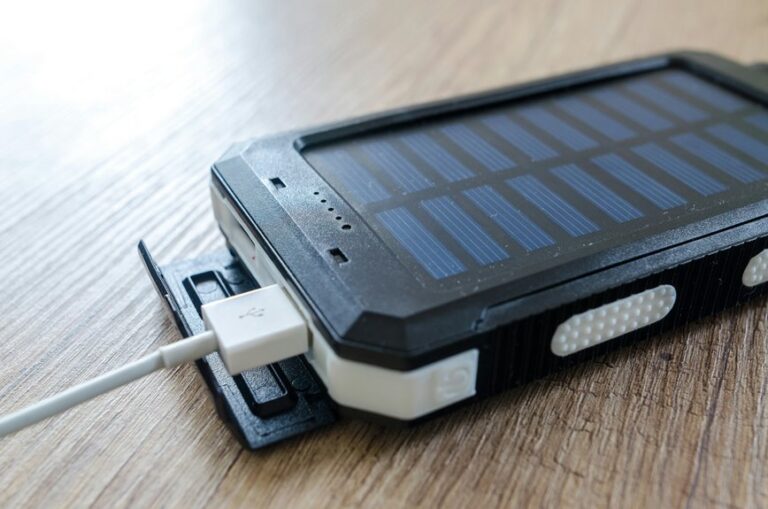
Portable and home solar generators lose energy at different points in the conversion chain, and the gap usually comes down to scale, load behavior, and system design.
You’ll usually see more loss in portable units because compact inverters, smaller batteries, and frequent portable load matching raise conversion strain. Mobile charging cycles also add overhead upon you recharge phones, laptops, and radios in short bursts, then idle the system. Home generators can reduce that friction with larger MPPT stages, steadier loads, and better thermal control, so less energy slips away as heat. Still, both platforms share panel, wiring, and battery losses, so your best gains come from matching demand to capacity and keeping every stage near its efficient operating window.
What Solar Generator Efficiency Numbers Really Mean
When you see a solar generator efficiency number, it usually refers to how much incoming sunlight a panel converts into usable electrical power under standard test conditions, not to how much energy the whole system delivers in daily use. You need careful lab rating interpretation to avoid overestimating output. The efficiency percentage meaning is simple: if a panel rates at 23%, about 23% of incident solar energy becomes electricity in the lab, while heat, wiring, inverter, and battery losses reduce field performance.
- STC ratings isolate panel performance.
- Real-world heat and angle cut output.
- Higher efficiency lets you fit more power into less roof or cabin space.
You’ll get the clearest comparison when you pair efficiency with watts, area, and thermal behavior.
Frequently Asked Questions
What Solar Panel Type Has the Highest Efficiency?
N type TOPCon and tandem panels achieve the highest efficiency, often above 25 percent and, in laboratory tests, over 32 percent. In your panel material comparison, they outperform standard silicon, though rooftop shading can still reduce output.
How Does Temperature Affect Solar Panel Conversion Rate?
As panel temperature rises, conversion rate falls because voltage drops faster than current increases, reducing output. Cooler conditions improve efficiency, while summer heat lowers it and seasonal changes also affect performance.
Why Do Lab Efficiency Ratings Exceed Real-World Performance?
Lab efficiency looks higher because testing holds temperature, light, angle, and load steady, and the rating method standardizes the measurement. Real use adds weather, shading, dirt, and changing positions, so output falls below the lab figure.
What Causes Electron-Hole Recombination in Solar Cells?
Electron hole recombination occurs when defects, impurities, or poorly passivated surfaces capture carriers and bring electrons and holes back together. Defect induced carrier loss and surface recombination reduce current, voltage, and overall efficiency in a solar cell.
How Efficient Are Next-Generation Tandem Solar Panels?
Next generation tandem solar panels typically reach 25% to above 32% efficiency. Their tandem cell architecture and perovskite on silicon stacking have pushed laboratory results past standard silicon panels and increased power density and output.